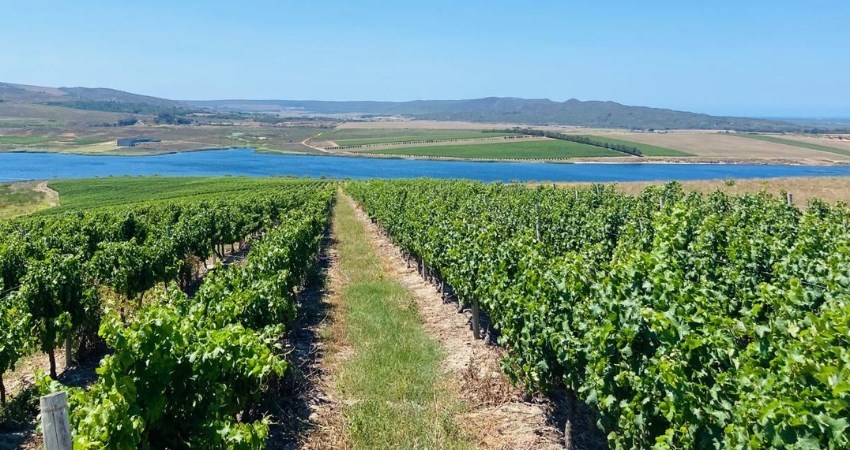
Views at Lomond Wine Estate, Agulhas.
The southernmost edge of the African continent has long been celebrated for its wild topography, shipwrecking coastlines, and treacherous maritime winds. Over the past few decades, this untamed landscape has been shaped by a dedicated wave of viticultural pioneers. Stretching across windswept plains from Gansbaai to Elim, and reaching eastward toward Malgas, the Agulhas Wine Triangle (AWT) – established in 2019 – has solidified its standing as one of the world’s most exciting, extreme, and critically acclaimed cool-climate wine regions.
The AWT collective brings together an impressive lineup of producers: Black Oystercatcher, Ghost Corner, Kroonpoort, Land's End, Lomond, Lost Boy, Raka, Sijnn, Skipskop, Strandveld, The Berrio, The Drift Estate, The Giant Periwinkle, and Zoetendal.
A wild terroir forged by wind and time
While the commercial viticultural landscape of the Agulhas region is modern, the story of the vine here spans roughly 150 years. Moravian missionaries at the historic Elim mission station first planted vineyards to produce communion wine (nagmaalwyn), unknowingly establishing the footprint for extreme maritime viticulture.
The modern commercial era took root in the late 1990s when Francis Pratt joined forces with neighbouring farmers Dirk Human (Black Oystercatcher) and Johan de Kock (Zoetendal). Guided by expert consultants, this group initiated the first major wave of commercial viticulture in Elim, proving that relentless maritime winds and unique site dynamics could yield world-class cool-climate wines. Pratt founded The Berrio in 1997, naming the estate after the nimble caravel that led Vasco da Gama's expedition around Cape Agulhas in 1497.
Ancient soils and extreme climate
What distinguishes this region is its remarkable geology, with soils dating back at least 300 million years. The vineyards sit atop a complex mosaic of broken shale, gravelly laterite (koffieklip), quartz, and weathered Table Mountain sandstone. These nutrient-poor, well-drained soils naturally curb vine vigour, resulting in restricted yields and small, deeply concentrated berries.
When paired with cooling maritime winds blowing off both the Atlantic and Indian oceans, the region enjoys an extraordinarily long, slow ripening period. This imparts an unmistakable signature to the wines: a vibrant backbone of natural acidity, striking minerality, concentrated fruit profiles, and a distinct ocean-salty salinity.
Biodiversity and sustainable conservation
Shaped by harsh coastal conditions, the Agulhas Wine Triangle is defined as much by its pristine biodiversity as its cold-climate wines. Regional producers take a proactive stance on environmental stewardship, demonstrating that fine wine production and deep-rooted conservation can seamlessly co-exist.
In Elim, local growers collaborated with neighbouring properties to form the Nuwejaars Wetlands Special Management Area, reintroducing native wildlife such as hippos and buffalo to the landscape. Further south in the Walker Bay Fynbos Conservancy, Lomond Wines became South Africa’s first winery to sign a formal Conservation Servitude with Fauna and Flora International. This binding agreement permanently protects endangered Milkwood forests, wetlands, and rare Elim Ferricrete and Overberg Sandstone Fynbos on the slopes of Ben Lomond. Beyond individual farms, the region borders natural sanctuaries including the Agulhas and Bontebok National Parks, De Mond Nature Reserve, and De Hoop Nature Reserve.
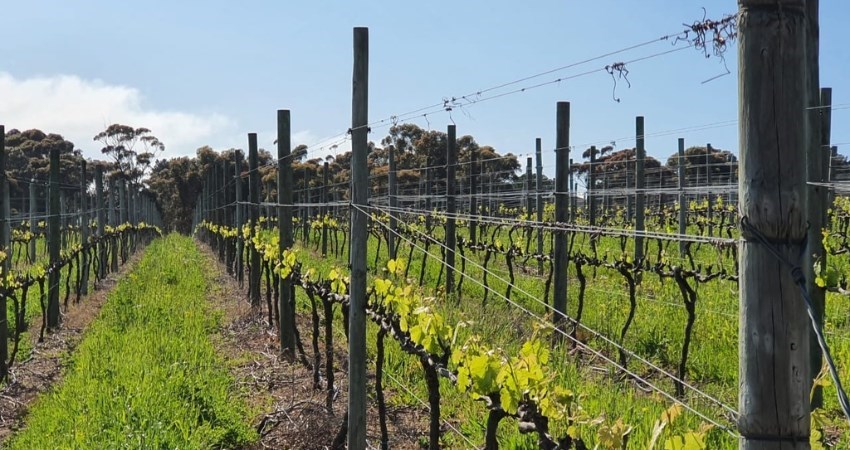
Young vineyards at Bruce Jack’s The Drift Estate, Napier.
Exploring the Triangle: Estates and experiences
A weekend journey through the region offers an engaging mix of boutique cellar door visits, scenic vistas, and warm coastal hospitality.
Kroonpoort and the Elim Terroir
Operating strictly as a boutique agricultural estate, Kroonpoort spans 10.2 hectares of vineyards planted in 2010 and remains a well-kept secret among winemakers seeking optimal cool-climate complexity. Situated between Elim and Cape Agulhas, this single-vineyard site is highly prized for its wind-exposed, laterite-rich soils, supplying top-tier fruit to elite producers. The property is owned by Jean-Luc Sylvain – a renowned Bordeaux cooper who also owns Château La Rose Perrière in Lussac, France.
First crafted in 2018 and initially exported exclusively to France, the Kroonpoort Sauvignon Blanc/Sémillon blend makes its South African debut with the 2025 vintage. Made by JC Martin of Creation, this limited-release vintage yielded just 3 000 bottles.
We meet Petra Swanepoel for a tasting at Pickled Green restaurant in Napier, owned by Phoebe and Ben Streak, who moved back from the UK three years ago. Ben trained with Protea Hotels and moved to the UK when he was 24 and has worked at Michelin-starred restaurants since. Produce is local and also foraged in the region.
Tastings can be organised in Bredasdorp with Petra on 076 830 5826.
Black Oystercatcher and Zoetendal Estate
Our visit to Zoetendal provides the opportunity to sample both its own portfolio and the wines of Black Oystercatcher (BOC) to save some time and chat to representatives of both farms about the latest cooperation between the farms.
Named after the bold coastal birds that breed along the shoreline, the Human family transformed the former grain farm now home to Black Oystercatcher into a modern boutique retreat. BOC wines are regular high-achievers, earning multiple Platter's 4.5-star ratings and Michelangelo gold medals. The Black Oystercatcher Sauvignon Blanc serves as a masterclass in Elim terroir, capturing a crisp, flinty mineral character alongside notes of gooseberry, lemongrass, and bright tropical fruit.
Visitors can enjoy dedicated tasting facilities, harvest table platters and luxury self-catering cottages.
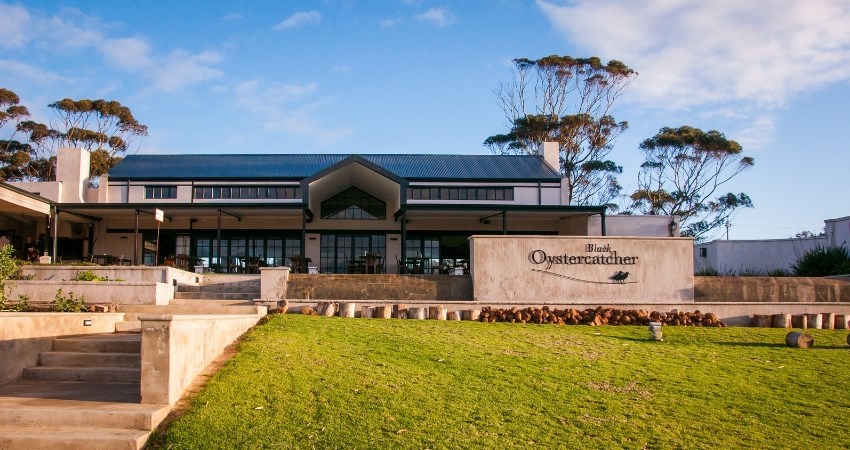
A visit to Black Oystercatcher Wines is a real feast for the senses.
Zoetendal derives its name from the 448-ton vessel Zoetendal, shipwrecked off Cape Agulhas in 1673. In 2004, farmer Johan de Kock established the wine estate, honoring the historic freshwater vlei where shipwreck survivors took refuge. Today, luxury accommodations overlook the calm waters of the vlei.
Navigating financial demands and aging vineyards required a strategic evolution for Black Oystercatcher. Transitioning into a private company, the winery brought in strategic equity partners – most notably Colin, owner of neighbouring Zoetendal Estate, alongside partners Atile Holdings and Bruce Jack.
A lunch and tasting, spearheaded by Jeanette van der Westhuizen and Matylda Human from BOC alongside Denzel Swarts from Zoetendal, reveals that this restructure delivered capital and fresh energy, and expanded operational expertise. In turn, this facilitated essential vineyard replanting and expanded cellar capacity.
As Denzel notes, the relationship between BOC and Zoetendal exemplifies collaborative growth. While maintaining distinct brand identities and price points – such as keeping Zoetendal’s high-end single-vineyard Sauvignon Blanc separate from BOC’s range – they share critical operational infrastructure. Black Oystercatcher manages Zoetendal’s vineyard blocks and provides contract crushing services, maximising operational efficiency in an area where farming costs can otherwise prove challenging for individual small producers.
This joint venture reflects the broader regional ethos marking roughly 30 years of modern viticulture in Elim. Local producers rely on collective support to overcome coastal farming hurdles, aligning shared values through joint international marketing in hubs like Hong Kong and supporting eco-tourism.
A standout for us is the Zoetendal Shiraz; historically, top Cape wineries sourced fruit from these compact vines, though today the estate reserves the harvest exclusively for its own label.
Lost Boy Wines
For an unfettered, direct-to-consumer experience, Lost Boy Wines represents the passion project of Trevor DeRuisé, a former professional mountain bike racer from America. Operating out of his home in Romansbaai, Trevor crafts unfined, unfiltered natural wines with minimal intervention.
His independent approach is reflected in a refusal to enter traditional wine competitions. Despite this, a blind tasting inside Lomond’s barrel room brought his wines to the attention of master critic Tim Atkin MW, who named Trevor's micro-production Mourvèdre Rosé his "Discovery of the Year 2025."
When faced with a trademark inquiry over his rosé's original name (Latigo), Trevor pivoted with good humour, hand-washing labels off existing bottles and relaunching the wine as Las Flores. This barrel-fermented, bone-dry rosé pushes category boundaries: full-bodied, complex, and highly limited, with a production run of around 800 bottles.
Though originally swearing off Sauvignon Blanc during his early career in California, the cool-climate character of Agulhas changed his perspective. His barrel-fermented Fumé Blanc showcases impressive palate depth, trading harsh acidity for soft, textural complexity with floral and elderflower nuances.
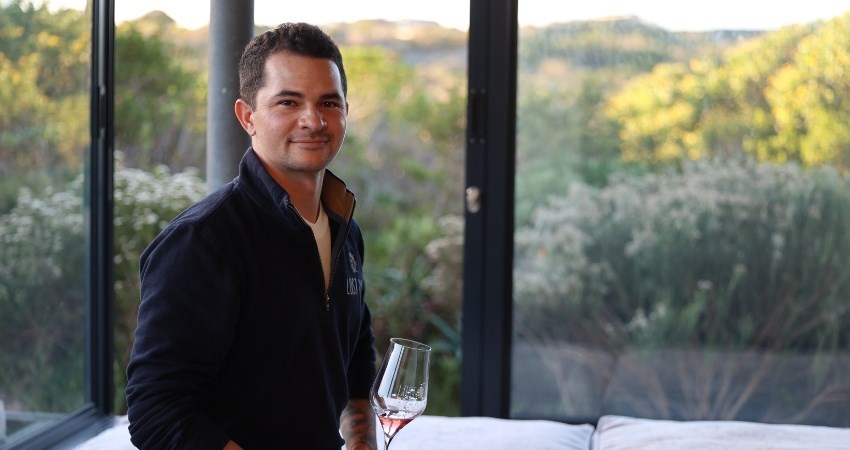
Trevor DeRuisé, owner-winemaker of Lost Boy Wines, in his home tasting room in Romansbaai.
Ghost Corner
An ideal accompaniment to fresh coastal fare, the Ghost Corner Bowline is a barrel-fermented Sauvignon Blanc and Sémillon blend offering weight, rich texture, and a piercing, saline finish. Conceived by Cederberg winemaker David Nieuwoudt, Ghost Corner pays homage to the historical graveyard of ships off the Cape Agulhas coastline. The wines regularly earn top honours, including multiple trophies at the Trophy Wine Show and 5-star accolades in the Platter's Wine Guide.
Regional highlights: Napier, Raka and Skipskop
A weekend exploration often leads through the town of Napier. Nearby sits Raka Wines, named after the dark fishing boat of owner Piet Dreyer. Raka reached a significant milestone when the Raka Biography Shiraz 2022 secured Red Wine of the Year, Best in Class, and Double Platinum at the National Wine Challenge, alongside top honours for long-term consistency from 2010 to 2025.
In Napier itself, local spots like the Vindigo wine shop showcase boutique regional discoveries like Skipskop Sangiovese – an expressive addition to the Cape South Coast portfolio displaying bright cherry fruit, dried herbs, and a savoury backbone. Established in 2012 by winemaker-proprietors Kevin and Karina de Kock, Skipskop pays homage to a vanished coastal fishing village.
The Drift Estate
Tucked away in a mountain enclave near Napier, Bruce Jack’s The Drift Estate focuses on producing deeply expressive, organic, and age-worthy single-vineyard wines from steep slopes. Bruce is also deeply committed to regional community development, establishing the Headstart Trust in 2010 to assist marginalised communities around Napier, as well as the Elspeth Music Trust in memory of his late mother.
Agulhas coastal dining and Lomond
As evening sets in over the fynbos-clad hills, coastal venues like Needles restaurant near the Agulhas Lighthouse offer seafood menus paired extensively with local AWT wine selections.
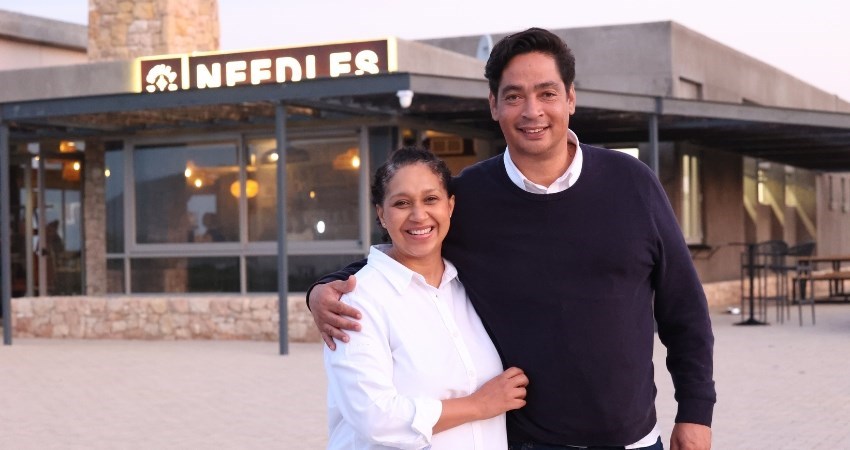
The owners of Needles restaurant, Noël and Shandré Bastiaans.
A relaxed day in the region can easily be spent at Lomond Wine Estate, overlooking its central dam. Lomond’s vineyards are meticulously mapped across more than 18 distinct soil types, surrounded by endangered limestone fynbos. Currently, 65ha of the estate is under vineyard, and wines are crafted by winemaker Anné van Heerden.
Highly decorated in the Sauvignon Blanc SA Top 10 and a frequent gold winner at the Decanter World Wine Awards, the estate's flagship offering is the Sugarbush Single Vineyard Sauvignon Blanc – named after the endemic limestone protea (Protea obtusifolia).
The spirit of the Agulhas Wine Triangle
The Agulhas Wine Triangle represents far more than a set of boundaries on a map. It stands as a testament to a collaborative spirit shared by independent winemakers who thrive on the edge of the continent. Whether offering a beautifully aged Sauvignon Blanc, an avant-garde natural rosé, or a robust, award-winning cool-climate Shiraz, this coastal region delivers a distinct sense of place.
When you explore the Cape South Coast, take the gravel roads, which yield direct access to memorable wines born from ancient soils and ocean winds.
Photos: All photos taken by Clifford Roberts.