Merlot accounts for approximately 6% of South Africa’s wine grape plantings and 13% of red varieties, with around 6.5 million litres sold annually (South African Wine Industry Information & Systems). Yet its premium potential is often overlooked.
Once viewed largely as an approachable, fruit-driven varietal, Merlot is being reassessed as the industry places greater emphasis on provenance, site and vineyard quality.
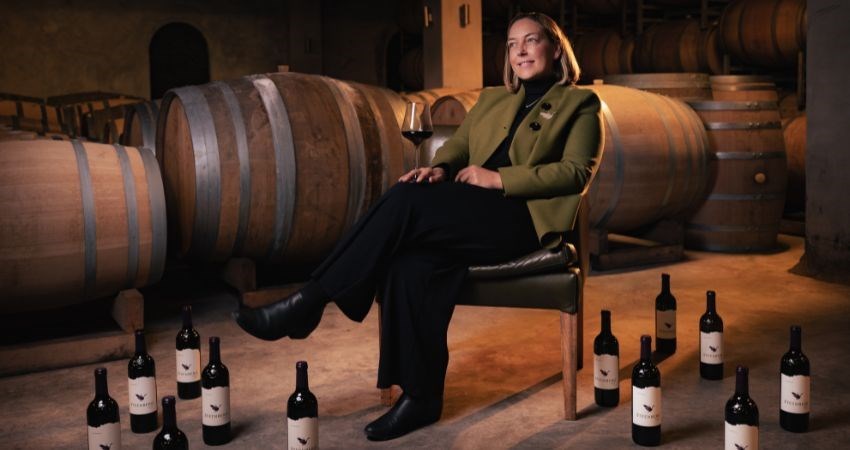
“Merlot is often underestimated, yet some of the world’s most celebrated wines are built around it,” says Elunda Basson, cellarmaster at Steenberg Vineyards. “A greater focus on provenance and vineyard expression is revealing its complexity, structure and ageing potential.”
According to Basson, site is key to premium Merlot.
“Merlot is particularly responsive to site. Too cool, and ripeness can be compromised; too warm, and freshness can be lost. The best examples achieve a careful balance between the two.”
This reflects a broader industry focus on provenance and sense of place. Wine education bodies such as the Wine Scholar Guild highlight the influence of climate, soil and vineyard exposure on Merlot’s structure, fruit profile and ageing potential.
At Steenberg, that balance begins in carefully selected east-facing vineyard blocks. While moderated by Constantia’s maritime climate, these sites receive the warmth of the morning sun, encouraging slow, even ripening that builds flavour, colour and tannin while preserving freshness.
The current vineyard sites are the result of years of refinement, with plantings focused on blocks that consistently deliver improved flavour development, tannin maturity and balance.
However, site alone does not determine quality.
“Great Merlot is built through hundreds of decisions throughout the growing season,” says viticulturist Vlok Hanekom.
“Our role in the vineyard isn’t simply to grow grapes. It’s to create the foundation for the style of wine we want to make. Every decision, from pruning and canopy management to crop regulation and harvest timing, is aimed at achieving fruit with natural concentration, balanced acidity and fully ripe tannins.”
Merlot’s early growth cycle demands careful vineyard management. Spur pruning controls crop levels, while canopy management and selective leaf removal improve airflow and sunlight exposure. Green harvesting reduces crop load, allowing the remaining fruit to achieve greater concentration and consistency.
These decisions ultimately support more consistent ripening, allowing harvest timing to be guided by flavour, tannin maturity and acidity rather than sugar levels alone.
“We’re looking for complete physiological ripeness, where fruit, tannins and acidity are in balance. That’s what ultimately determines quality,” says Hanekom.
This approach is strengthened by the partnership between Hanekom and Basson. Throughout the season, vineyard and cellar teams align decisions on crop levels, ripening and harvest timing to shape the final wine style.
“Every vineyard decision has consequences in the cellar,” says Basson. “Vlok and I work towards the same goal. The vineyard creates the potential; the cellar preserves and refines it.”
In the cellar, the focus remains on preserving vineyard expression A partial saignée increases the ratio of skins to juice, enhancing colour, flavour concentration and tannin structure. The wine is then matured for an average of 24 months in third-fill and older French oak barrels, adding complexity while allowing the fruit and site to remain at the forefront.
“At Steenberg, structure is never achieved at the expense of freshness,” continues Basson. “Every cellar decision protects fruit purity and acidity while building depth, texture and longevity.”
The resulting wine combines dark berry fruit, plum and subtle floral notes with cedar, spice and finely integrated oak. The palate is generous without being heavy, supported by refined tannins, vibrant acidity and a long, balanced finish.
This approach also reflects a broader opportunity for South African wine.
“South Africa has all the ingredients to produce world-class Merlot,” says Hanekom. “Success comes down to matching the variety to the right sites and managing it with precision. As viticulture evolves, so too does our understanding of what Merlot can achieve.”
Constantia offers conditions well suited to Merlot. Its maritime climate promotes slow, even ripening, allowing flavour development and tannin maturity to progress in tandem while preserving freshness.
Recent international recognition reflects this. Steenberg Merlot earned a Platinum Medal at the 2026 Decanter World Wine Awards and was named Merlot of the Year at the 2026 London Wine Competition, reflecting years of vineyard and winemaking refinement.
For Steenberg, however, the awards are not the story.
“They are the outcome,” Hanekom says. “The real story begins in the vineyard. When site, viticulture and winemaking are aligned, Merlot can achieve remarkable complexity, balance and ageing potential.”