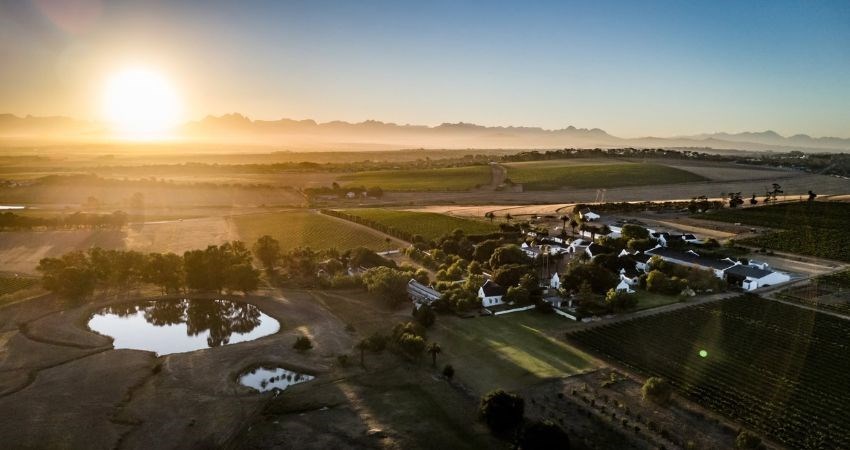
Whether it is collecting a Veritas Double Gold or three each year, or securing a place in the Top 10 Pinotage and Top 10 Sauvignon Blanc competitions, Diemersdal Estate seems to these days occupy the spotlight whenever wine accolades are handed out.
Yet the estate’s achievements over the past six months have surpassed even its previous successes, leading one to conclude with some confidence that, in terms of competition results, Diemersdal is currently the most highly acclaimed wine estate in South Africa.
This follows the announcement of the results of the Investec Trophy Wine Show, arguably the country’s most demanding wine competition, where Diemersdal was named Champion Winemaker – effectively the award for the competition’s best overall performer based on the results achieved by its wines.
The estate secured two trophies: Best Niche White Wine for Grüner Veltliner 2024 and Best Museum Class Sauvignon Blanc for The Journal Sauvignon Blanc 2021. Gold medals were also awarded to the Bordeaux-style blend Private Collection 2021, Syrah 2023 and The Journal Pinotage 2023. It is an extraordinary achievement considering the calibre of the local and international judges involved in the Investec Trophy Wine Show and chairman Michael Fridjhon’s exacting standards for wines deemed worthy of gold medal and trophy recognition.
Those with a good memory will recognise that these latest honours follow Diemersdal’s selection as the Platter’s Guide Top Producer for 2026, an accolade more commonly associated with fashionable, media-hyped and supposedly “cool” producers than with a long-established family estate in Durbanville producing wines on a scale that could be interpreted as generous.
To borrow, somewhat unfairly, from one of rugby great Naas Botha’s most famous quotations, one could say that “at the end of the day” Diemersdal can justifiably be regarded as one of South Africa’s leading and most versatile wine producers, based on the evidence before us. Naturally there will be self-appointed wine experts who argue that many wineries do not enter competitions such as the Trophy Wine Show, and that any claim of being the “best” is therefore invalid. To these sceptics one might quote another rugby legend, Boy Louw, who famously advised doubters to “looks at the scoreboard”.
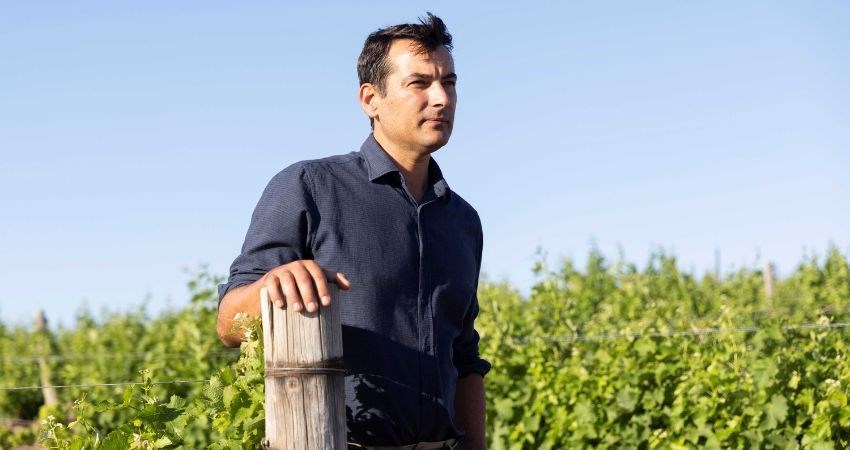
Thys Louw, Diemersdal’s sixth generation proprietor-winemaker
The more relevant question – one often posed to wine commentators – is what makes Diemersdal such a consistently successful producer? Importantly, its achievements extend far beyond the competition circuit. The estate also enjoys considerable esteem among wine consumers.
Producing around three million bottles annually, Diemersdal is one of the country’s most successful commercial wine enterprises. Incidentally, this fact undermines the theory held by some wine purists that producers working at scale are incapable of making wines of distinction and outstanding quality.
The obvious questions therefore become: how does Diemersdal do it, and why does the estate command such respect among judges and consumers alike?
The most straightforward answer is an unwavering commitment to quality across every wine in its diverse portfolio of reds and whites. This is something owner and winemaker Thys Louw and his teams in the vineyards and cellar live every day, a tenet instantly apparent to anyone fortunate enough to spend time observing how the estate operates.
One does not need a doctorate in viticulture to see that the vineyards are farmed by people who, for generations, have understood that the birthplace of wine deserves reverence. Long rows of vines stretch across immaculate low ridges. There is scarcely a weed to be seen, and the vines are uniform and meticulously maintained. Whether shortly after winter pruning or during the vigorous growth of early summer, Diemersdal’s vineyards appear ready for the cover of an international wine publication. Even the cover crops seem groomed to perfection.
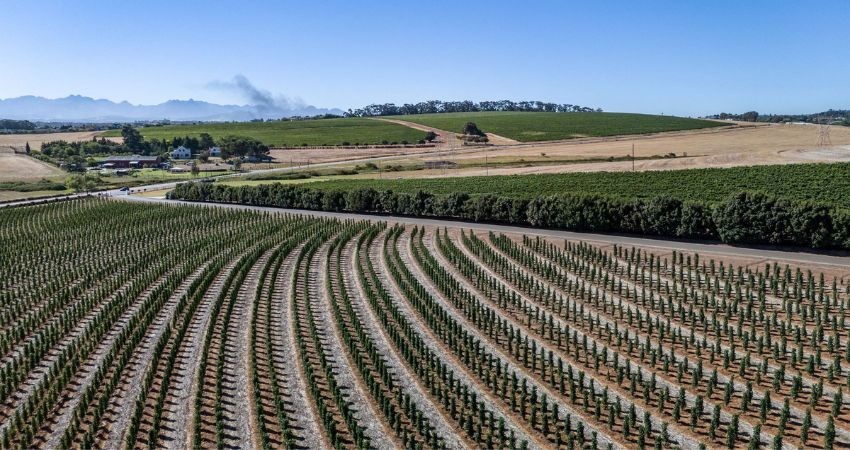
As Thys often says, the belief that vineyard care lies at the heart of wine quality is an ethos established by the first Louw family members who arrived at Diemersdal in 1885. His task is simply to build on that legacy.
Place also plays a vital role in this philosophy. Durbanville’s maritime climate, gentle slopes and weathered granite soils allow the vineyards to produce grapes with the flavour and aroma profiles required to make wines of distinction and regional character. Speaking to Thys and his father Tienie, from whom he took over in 2005, one is struck by the respect they hold for Durbanville as a wine region and the influence it has on their approach to winemaking.
The region itself undoubtedly benefits from this outlook. Diemersdal’s recent competition successes will surely remind many people – if they did not know it already – that Durbanville stands shoulder to shoulder with South Africa’s finest wine regions.
In the cellar, the pursuit of quality is driven by a combination of tradition and innovation, together with an unapologetic belief that only the best will do. If Thys’s favourite Sauvignon Blanc producers in Sancerre use Stockinger barrels and he believes those barrels contribute the desired dimension to his wines, then Stockinger it will be, regardless of cost.
Tradition remains equally important. Pinotage has been part of Diemersdal’s story for decades. If the best results come from manually punching down fermenting grapes in large old open wooden fermenters, then that is how the wine will continue to be made.
Innovation, particularly with Sauvignon Blanc, is another hallmark of the estate. One example is the Winter Ferment Sauvignon Blanc. Juice from the grape press is frozen immediately after harvest. Six months later, in the depths of winter, it is thawed and fermented, resulting in a wine with a distinctive aromatic profile.
This forward-thinking approach is balanced by a profound appreciation for history, something visible throughout the estate’s immaculate white buildings and historic Cape Dutch gables. Six generations of the Louw family have farmed here, while Thys and Tienie are direct descendants of Jan “Broertjie” Louw, who was making wine along the Liesbeek River as early as 1660 and is regarded as South Africa’s first wine farmer.
History and culture, reflected in Diemersdal’s labels and identity, play an important role in the appeal of the brand. Wine consumers continue to value the cultural connection between a glass of wine and the people who made it, a quality that sets wine apart from most other alcoholic beverages.
Every generation contributes to the estate’s history and reputation. Good wine has always been made at Diemersdal. But the current custodians have undoubtedly fostered something different among Durbanville’s vineyards.
They have created a culture of winning.