Leadership is not an innate trait; it evolves through experience, mentorship, and supportive environments that encourage curiosity, growth, and collaboration.
Investing in leadership development also promotes diversity of thought and innovation, both essential to sustaining excellence in the wine industry. When cellars invest in their people, they send a powerful message that their employees matter. Nurturing future leaders strengthens cooperation, builds loyalty, and creates a resilient workforce equipped to meet the demands of an evolving wine industry.
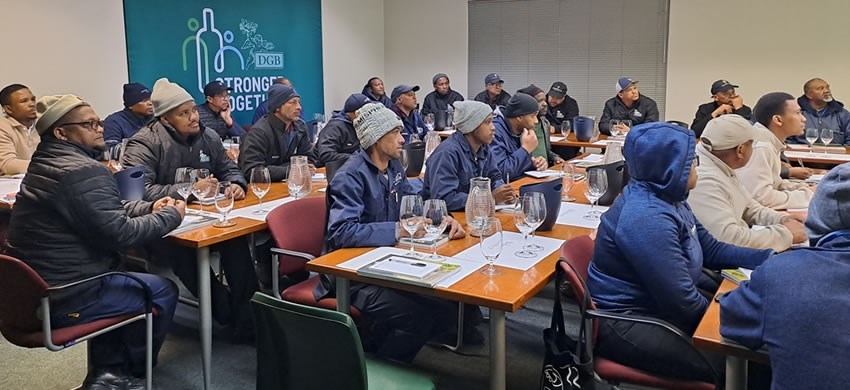
The South Africa Wine Cellar Assistants’ Programme plays a vital role in transferring knowledge to permanently employed cellar assistants, while empowering individuals and cultivating leadership potential. Many participating cellars actively mentor cellar assistants who show leadership promise. These individuals often take initiative, motivate others, volunteer for challenging tasks, and approach problems with a positive, solutions-focused mindset. They balance their responsibilities effectively while supporting their teams. By identifying these qualities early, winemakers and cellar management can provide guidance, training, and opportunities needed to help emerging leaders reach their full potential.
Sustainable leadership does not develop by chance. It thrives in environments that prioritize learning, encourage curiosity, and create space for growth. Winemakers play a crucial role in fostering transparency, teamwork, and a shared commitment to quality, including values that inspire future leaders and strengthen the cellar environment.
A holistic and practical approach to leadership development is essential, combining mentorship, coaching, and formal training. During interviews with winemakers from Roodezandt RF, Opstal, Alvi’s Drift, and Waterkloof, they were asked which characteristics they value most in potential leaders. All agreed that strong leadership is built on a foundation of competence, commitment, and integrity. Key skills highlighted included clear communication, emotional intelligence, and sound decision-making under pressure. Effective leaders, they noted, must be humble and respectful, yet flexible, and open to new ideas, with a strong focus on unity and shared purpose within their teams. While mentorship and training were unanimously recognized as vital, some acknowledged that not all cellars yet view training as a long-term investment.
Attie Louw, of Opstal, emphasizes that future leaders must take responsibility for their actions and decisions. He believes leaders should embrace innovation and remain open to constructive feedback from both management and colleagues. At Opstal, integrity is regarded as a cornerstone of leadership, with professional performance and personal conduct shaping an individual’s leadership journey.
Christie Steytler, retired production manager of Roodezandt RF, and Jean du Plessis, current production manager, share this emphasis on integrity, while also highlighting humility and respect as essential traits. They stress that leadership development, particularly at junior levels, is a gradual process that requires time, patience, and consistent guidance.
Riaan Marais, cellar master at Alvi’s Drift, believes future leaders must have a clear vision for their careers and the perseverance to pursue it. He agrees that humility and respect are non-negotiable, noting that arrogance undermines effective leadership. Discipline, a willingness to apply learned knowledge in practice, and patience are, in his view, fundamental to developing strong leaders.
According to Nadia Langenegger, winemaker at Waterkloof Estate, initiative and a genuine passion for winemaking are key indicators of leadership potential. Attention to detail, particularly in winemaking processes, is critical. She believes leadership development is strengthened by gradually increasing responsibility during each harvest, allowing individuals to take ownership of tasks without micromanagement. An open-door policy and a sincere interest in team members’ lives contribute to developing confident and capable leaders.
Jean and Christie also note that while ambition and commitment are important, leadership development must be approached realistically. Aspiring leaders need to progress through the ranks and gain experience gradually. It is a challenging journey, but ultimately a rewarding one.
Finally, regular feedback, openness to feedback, and ongoing self-assessment are essential for building self-awareness and accountability. These practices not only support individual growth but also help cultivate a culture of shared leadership, one that values initiative, collaboration, and continuous development within the cellar.
For more information about the South Africa Cellar Assistants’ Programme, please contact Santi Basson at santib@mweb.co.za or 0722 988 186.