World Recycling Day in March always takes me back to my time as an 18-year-old plaaskind living in Berlin for a year. Three decades ago, I was struck by the efficiency of Der Grüne Punkt, the ease of reusable shopping bags, and the normality of thrift culture. It reshaped my outlook for life: waste not, want not.
More recently, during an Agricultural Writers SA visit to the ButtaNutt factory in Paarl, I saw that same mindset in action. Beyond their wholesome, plant-based products, ButtaNutt uses 100% recyclable packaging; redesigned bottle shapes have halved transport impact by doubling packing efficiency; and centralised systems ensure cleaning materials and chemicals are reused as efficiently as possible. Experiencing this first-hand was indeed inspiring!
This article is by no means a complete reflection of all sustainability efforts in the wine industry – rather, it’s a collection of examples intended to spark further thinking around reducing, reusing and recycling, whether in business or at home, and to highlight how environmental responsibility underpins long-term resilience.
The South African wine industry – alongside its suppliers, from packaging to bottling – continues to make meaningful strides towards a more circular economy. According to the World Wide Fund for Nature (WWF), more than 90% of local producers farm in line with environmentally responsible practices under the IPW sustainability seal, earning global recognition for balancing production with preservation.
From lighter bottles and water efficiency to composting, waste diversion and energy innovation, these efforts require time, investment and intent. In an era where greenwashing is a real concern, it is equally important to acknowledge those setting credible standards – from producers to industry bodies and regulators.
Even the basics matter. At Nuy Winery, grape skins are collected for composting by partners Vallei Organies and Brenn-o-Kem, returning to members as soil-enhancing material, while stems are repurposed as animal feed, mulch or road cover. At Eenzaamheid Wine Estate, strict recycling protocols, composting and practical reuse, such as converting molasses containers into sheep feed bins, form part of daily operations.
Small steps, giant leaps for future generations
Growing up near the Polkadraai Hills, I remember how Johan Reyneke already approached land and people differently three decades ago. Today, Reyneke Wines continues to lead with a deeply considered, biodynamic philosophy.
Recent and upcoming initiatives include:
-
Lightweight bottles: Premium bottles reduced from 580g to 450g in collaboration with Ardagh Group, with other ranges now at 350g.
-
Upcycled cellar design: A full rebuild (completion 2026) with Djernes and Bell incorporates farm-sourced materials, from field boulders used structurally to repurposed stainless-steel piping; old fermentation tanks cut and reassembled into steps, benches, and hardscape; on-site timber, invasive species and dismantled roof elements reworked into shelving and joinery.
As the team at Djernes and Bell describes it: “These acts of careful disassembly and material reincorporation are not just pragmatic – they are mineral stories that mirror Reyneke’s biodynamic ethos.” Click HERE to read more.
-
Technology and efficiency: A bioreactor, electric vehicle and irrigation drone were made possible through support of the United Nations Industrial Development Organisation.
-
Rewilding: Continuing indigenous fynbos restoration improves biodiversity, soil health and natural pest control.
-
Creative reuse: Soon to come, a collaboration with Botswana designer Peter Mabeo to create furniture from on-site materials.
-
Refillable wine: A 12L wine refill system launching soon at La Colombe.
-
Social impact: Later this year, Reyneke will release two new wines in support of the Cornerstone project. Armand Esterhuizen, Reyneke Wines sales and marketing manager, explains: "This initiative empowers workers to make choices for themselves. We have already reached significant milestones – vineyard worker Andre Jacobs has accessed homeownership, while Lizanne Jafta has progressed from student to tasting room manager and production assistant. We are currently exploring ways to involve more businesses in the project to create a broader and more meaningful impact." Reach out to armand@reynekewines.co.za if interested.
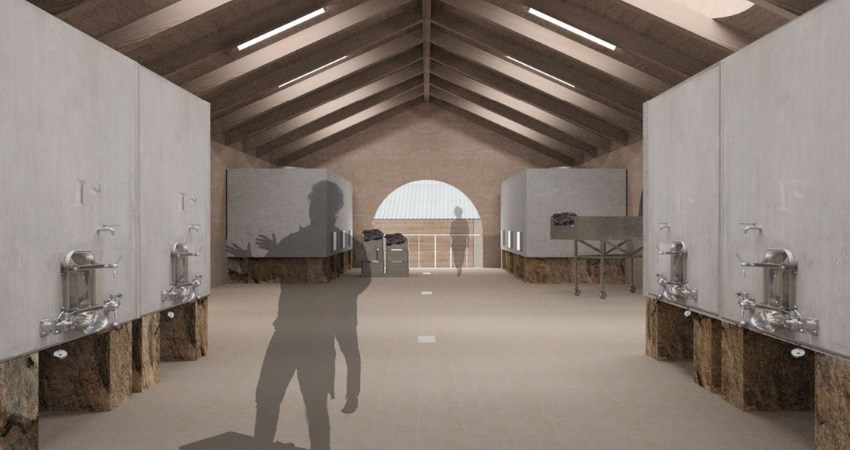
A render of Reyneke's new upcycled wine cellar. Image: Djernes and Bell.
Vergelegen’s tally: 25 tons of recyclable material
Vergelegen Wine Estate, the first Biodiversity and Wine Initiative Champion back in 2005, integrates recycling across all operations – from winery to hospitality and staff housing – collecting around 25 tons of recyclable material annually. What a feat! Organic waste is composted back into vineyards, while participation in the Confronting Climate Change initiative ensures emissions are tracked and benchmarked.
"I used to be a wine bottle" – turning trash into treasure
As one of the WWF’s 60+ Conservation Champions, Anthonij Rupert Wines brings sustainable design alive through its Protea range. Lightweight bottles, recyclable materials and reusable Amorim Helix closures reduce impact, while artist Mark Eisen captures the idea best: "I love the thought that someone might go to bin the bottle and then stop, and keep it instead." Eisen’s unique bottle designs are available for download at no cost as A3-wrapping paper or placemats online.
Since 2018, this thinking has extended to collaboration with Klapmuts-based entrepreneur Lizl Naude of Lilly Loompa Upcycling Gifts, transforming the already beautiful Protea bottles into bespoke gifts.
At Lilly Loompa, Lizl’s work is rooted in purpose. What began as a response to hardship has grown into a multi-award-winning business built on reimagining waste. Discarded glass, wood and metal are transformed into functional, design-led pieces, from glassware to lighting. Lizl’s philosophy is simple: upcycling extends both the life and the value of materials.
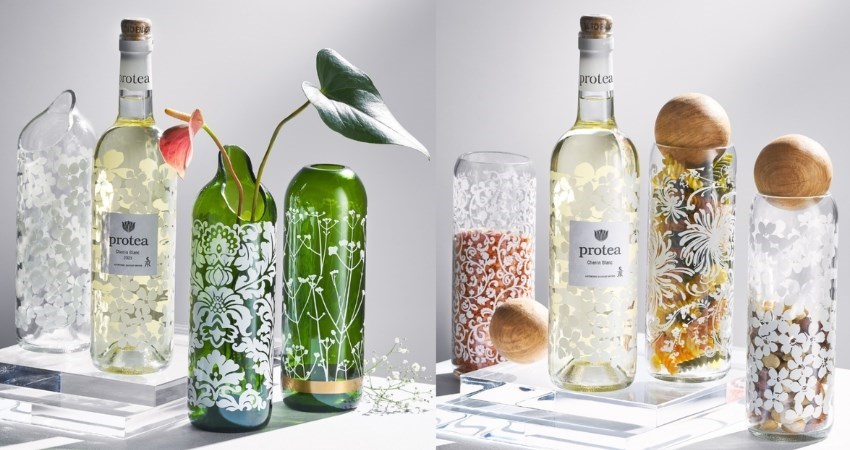
Lilly Loompa's glassware gifts, made from upcycled Protea wine bottles.
“People don’t always know what to do with waste, but for me, it became the answer. This is my purpose … Dis hoekom ek elke oggend opstaan... to change people’s views of waste.”
Visit Lilly Loompa at lillyloompa.com.
Recognising the carbon heroes
The WWF Conservation Champions are also featured on the Carbon Heroes platform, which highlights measurable sustainability progress across agriculture.
One standout is Robertson Winery, which in 2025 introduced the world’s first fully recyclable bag-in-box wine system, attracting new consumers and increased export interest, particularly in recycling-focused markets like Sweden.
As CEO Pieter Siebrits explains: "Sustainability is one of our core values and is embedded in everything we do. We’ve seen strong growth, particularly in our 3L range where this message was central, but beyond sales, it’s also about building awareness among our people and the communities connected to us."
With around 90% of its glass already in lightweight bottles and ongoing investment in recyclable packaging technologies, the winery continues to evolve its approach across all product formats and markets.
Other Carbon Heroes include:
- Hartenberg Wine Estate – regenerative farming with ducks, cattle, composting and biodiversity restoration
- Spier Wine Farm – zero waste to landfill and 100% wastewater recycling, alongside strong community programmes
- Perdeberg Wines – certified organic, with a “think green” philosophy and sustainability embedded in daily operations. This includes minimal water usage, IPW-certified producers, key producers holding Fairtrade (FLSA) accreditation, and red wines crafted to be vegan-friendly.
- Villiera Wines – solar energy, reforestation and conservation, plus support of the Pebbles Project
- Diemersdal Estate – habitat conservation and soil-focused farming
- Kleine Zalze Wines – IPW-certified sustainability and WIETA accreditation
- Lemberg, Montagu Winery, Wellington Wines and De Wetshof Estate – all advancing sustainable practices and carbon measurement.
- Tokara Wine and Olive Farm and Lanzerac – both recently set Science Based Targets (SBTs).
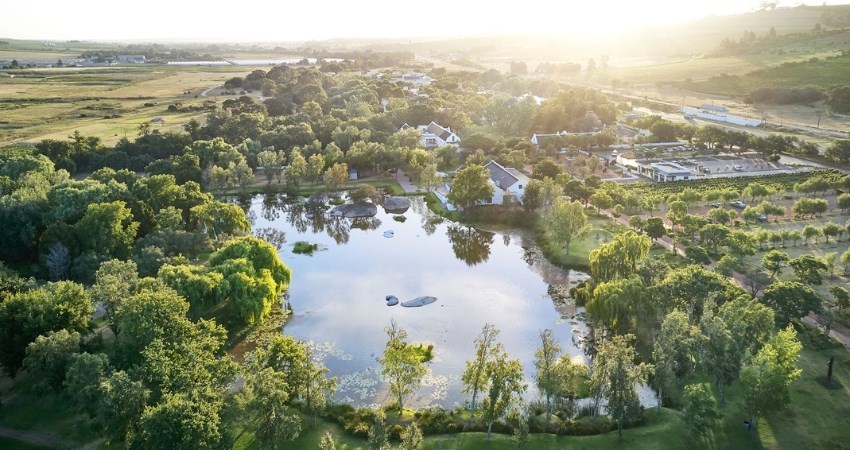
Spier Wine Farm.
CorkLife: extending the life of natural materials
Amorim’s CorkLife initiative promotes the recycling of natural cork – over 40 million of which are opened annually in South Africa.
Although corks cannot be reused as stoppers, they can be repurposed into flooring, surfboards, shoe soles and design materials through a low-energy, chemical-free process, extending the life of a renewable material while replacing more harmful alternatives.
Think, eat, save
Food waste remains one of South Africa’s most pressing environmental challenges. A significant share of what ends up in landfill is organic waste, with discarded food making up a large portion, representing not only lost resources, but also missed opportunities to address food insecurity.
SA Harvest tackles this directly by redistributing surplus food from farms, manufacturers and retailers to communities in need. Leading producers such as Lourensford Wine Estate and Môrester Farms, both Carbon Heroes, donated hundreds of tonnes of produce in 2024, ranking among the top 10 contributors to SA Harvest’s pipeline. Their contribution highlights how commercial farming enterprises can drive meaningful, systemic impact. Learn more at saharvest.org.
Become a glass hero
The Glass Recycling Company supports nationwide glass recycling, offering collection points and programmes for producers and hospitality businesses. And in Worcester, Bottle Traders buys, washes and recirculates glass bottles, closing the loop in a practical, scalable way.
"Waste not, want not" remains as relevant as ever. Every decision, from reducing food waste to reusing materials and conserving resources, contributes to a broader cultural shift. The above initiatives show that reducing environmental impact can go hand in hand with social upliftment and economic resilience. If you know of projects that deserve recognition, let’s continue to grow this conversation.

Good news stories abound in the South African Winelands. The #wineforgood campaign, launched by wine.co.za in June 2016, is all about sharing these uplifting stories. We dedicate the month of April to our #wineforgood campaign each year, sharing a good news story every day. Join us in spreading the good news about South African wine. If you'd like to submit a story, please email editor@wine.co.za. For more stories, visit www.wineforgood.co.za.