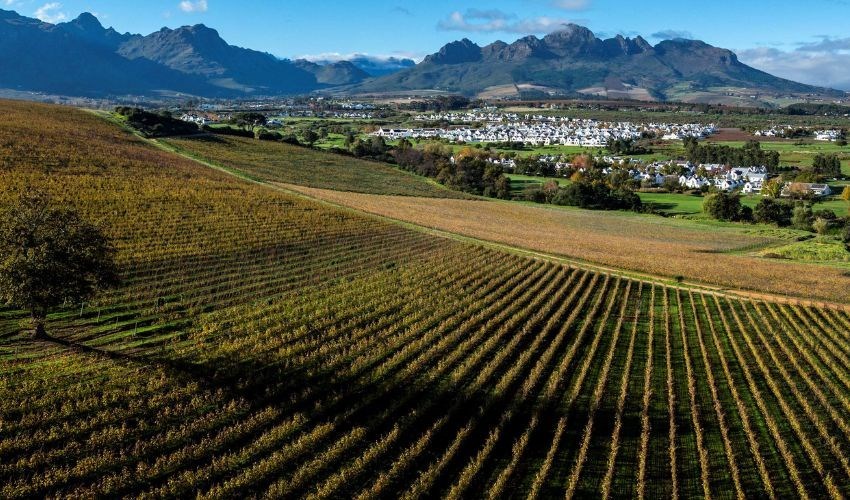
Kleine Zalze Wines, the award-winning winery based in Stellenbosch, makes a diverse range of varietal wines and styles from vineyards based in Stellenbosch and various other regions, including Durbanville, Darling and Piekenierskloof.
“Conditions leading up to this year’s harvest have been like a perfect golf swing,” says Kleine Zalze viticulturist Henning Retief. “From vineyard dormancy in a cold winter, through bud‑break, berry‑set and veraison, conditions have been ideal, and this is reflected in the exceptional fruit we are busy harvesting.”
This year’s harvest in Stellenbosch, Darling and Durbanville began 10–14 days earlier than normal. “The hot, dry and windy weather patterns since November played a role in this early start, but the entire season was ahead of schedule, with bud‑break about 10 days earlier,” Retief adds.
“At one stage the relentlessly warm, dry conditions through December and early January were a concern, but grape quality is determined by the vine’s physiology over the previous one or two years,” he explains. “And last year’s brilliantly cold winter set the pace, ensuring the vines developed balanced chemistry in the ripe fruit and an authentic expression of varietal character and terroir.”
Kleine Zalze is currently harvesting Chenin Blanc from Stellenbosch, with Sauvignon Blanc coming in from Darling and Durbanville. Chardonnay, the other key white, is being picked in Stellenbosch, while on the red side early Syrah from Darling has begun arriving.
“Our philosophy at Kleine Zalze is not to focus solely on sugar ripeness at harvest, but to analyse the complete chemistry to ensure optimal flavour expression during fermentation and in the finished wines,” says Retief. “Picking our white grapes around 21°B may sound conservative in conventional terms, but behind those sugar levels the fruit shows pH values near 3.2 and brisk acidities of six to seven grams per litre. Energetic fermentation ensures strong flavour development with structure, balance and vigour in the newly fermented wines, which bodes well for their evolution in tank, barrel, amphora or concrete egg.”
If one word describes the 2026 harvest so far, says Retief, it is generosity. “All our vineyards are showing a substantial increase in yields alongside impressive quality and distinct flavours. One does not normally associate high volume with great flavour, but that is what we’re seeing in 2026. Even our Old Vine Heritage Chenin Blanc vineyards, farmed dryland in Stellenbosch, are bearing substantial, healthy crops despite the dry, hot summer conditions and the previous dry winter.
“Kleine Zalze’s Stellenbosch Chenin Blanc and Chardonnay are delivering concentrated, expressive fruit, while the Sauvignon Blanc from Durbanville and Darling offers intense aromatics and vibrancy. It’s looking superb.”
On the red side, early Syrah from dryland vines in Darling brings bright elegance to Kleine Zalze’s style. Grenache from Piekenierskloof near Citrusdal will follow, with Cabernet Sauvignon from Stellenbosch closing the season.
“The 30 mm of rain and cooler conditions Stellenbosch experienced in the week of 9 February have slowed ripening somewhat, with some growers having to protect vines from rot,” Retief notes. “Overall vine health has been excellent due to the generally hot, dry conditions. With another heat wave forecast for the week of 16 February, rot risk should be limited, and 2026 looks set to be a splendid vintage across the board.”