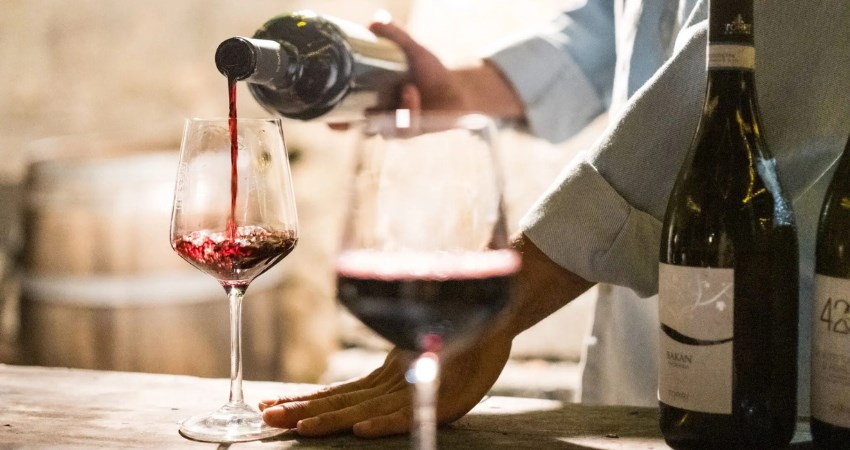
A wine expo might not seem like the obvious place to think about climate change. But at the Proudly South African Local Wine Expo in July, held at Prison Break Market in Midrand, Johannesburg, the scorching winter weather offered an uncomfortable reminder of the conditions farmers are increasingly having to plan around. The event featured businesses including Four One Wine and Luc Mo Wines. But the people at the sharp end of climate change are the farmers growing the grapes that eventually become the wine on those tables.
South African wine producers have already experienced the effects of drought, extreme weather and water shortages. The VinPro report says rainfall from December to the end of February was 50% below the long-term average. It says total rainfall during the winter months was approximately 20% below the long-term average, with conditions becoming extremely dry from July onwards.
In parts of the Klein Karoo, particularly around Ladismith, irrigation water was severely limited. The report also says spring temperatures were about 1°C to 3°C warmer than normal, with some vineyard blocks reaching bud break one to two weeks earlier than usual. A study published in the South African Journal of Oenology and Viticulture says farmers may need to adjust irrigation, soil management, grape varieties, vineyard locations and harvesting practices as conditions change.
Researchers have also pointed to a particularly difficult combination for South African vineyards: higher temperatures alongside limited water. The study notes that many South African wine-growing regions already receive too little rainfall to meet grapevine water needs, so irrigation is an important part of production. It recommends approaches including improved water-use efficiency, changes to irrigation strategies and careful selection of cultivars and rootstocks.
The advice exists. Paying for it is harder
Western Cape Department of Agriculture spokesperson Daniel Johnson says government provides guidelines and technical information on climate-smart agriculture, including water conservation, soil management and production methods. The Agricultural Research Council also provides climate-smart agriculture training, while government and industry bodies support research into issues such as water efficiency and climate adaptation.
The Western Cape has also had a dedicated climate response framework for agriculture since 2016. The SmartAgri Plan was developed with the University of Cape Town’s African Climate and Development Initiative and is intended to provide a roadmap for building climate resilience across the agricultural sector. The province’s current planning documents say it is incorporating climate-smart practices into its agricultural programmes and that research is focusing on adaptation and mitigation.
The wine industry has been researching these problems for years. Winetech, for example, has funded work on irrigation strategies, water stress, drought-tolerant cultivars and rootstocks, while VinPro has worked with producers on soil and vineyard management. A farmer may know that more efficient irrigation would help, yet still not have the money to install it. That is where government funding programmes become important.
That research is also increasingly being tested in vineyards rather than left in laboratories. The industry’s GEN-Z Vineyard Project, which has since evolved into the Advancement of Viticulture Collective (ADVICO), uses demonstration sites to test cultivars, clones, rootstocks and vineyard practices under real farming conditions. ADVICO says its current focus includes climate adaptation, efficient resource use and finding cultivars and rootstocks suited to changing conditions.
Read more.