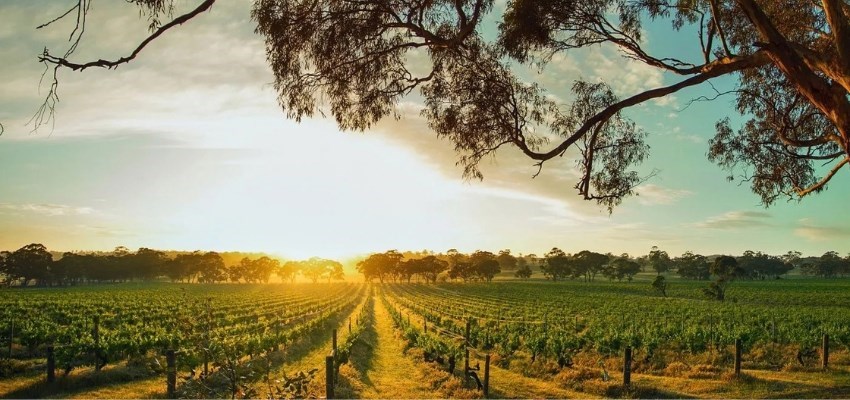
Over 50 years as a wine writer, Jancis has seen her supposedly sleepy, tradition-obsessed world transformed. Ahead of the imminent launch of the 9th edition of The World Atlas of Wine, here she sets out 50 of the key developments, from screwcaps and scores to regenerative viticulture.
It seems incredible now but when I started writing about wine, on 1 December 1975, the best-selling wine in Britain, and important enough in the US to warrant major advertising campaigns, was a sweet sherry: Harveys Bristol Cream. It sold 12 million bottles a year and was unavoidable. It was a stablemate of Babycham (marketed as ‘the champagne perry’) when I was taken on as assistant editor of a now-defunct wine-trade magazine, Wine & Spirit, a job that I might not have been given had the publisher asked whether I could type.
Champagne’s lawyers were yet to unsuccessfully sue Babycham for abuse of the name they have so assiduously protected since. And the sherry capital, Jerez de la Frontera in Andalusia, was where I was most often sent in my quest for wine-trade ‘news’ (a loose term). I got used to seeing various luminaries of the wine trade pop up in the pool of the Hotel Jerez.
Sherry exports reached a peak in 1979 – despite competition from Cyprus, South Africa and Australia, all of which blithely sold a wine called sherry in that less regulated era. Then the quality of genuine Spanish sherry suffered, not least because of the dangerously rapid expansion of a company called Rumasa, the indirect result of an exclusive supply deal done by Harveys in 1964. (Rumasa notoriously bought three banks in one day.) Most unfortunately, sherry today has become a niche wine beloved, like Alsace wine and Riesling, by professionals but spurned by the mass market.
Back in 1975, we wine writers were helped considerably by an innovative new book. Before it, few wine books were aimed at the general public, other than the odd encyclopedia of wine and reminiscences of particular bottles consumed by well-heeled gentlemen amateurs. They had titles such as Stay Me With Flagons and Wayward Tendrils of the Vine. But Hugh Johnson’s The World Atlas of Wine, first published in 1971, actually showed for the first time the geography that created each of the world’s wines. Wine is, after all, geography in a bottle – and one of the few things we buy that signal clearly the exact spot on the globe responsible for them.
Seventy-four pages were devoted to France, 24 to Germany, and 14 to all of Italy, which was bundled with the likes of ‘Jugoslavia’ and ‘Cyprus and Malta’ under the heading ‘Southern and Eastern Europe and the Mediterranean’. As for ‘The New World’, South America was allotted a total of two pages, New Zealand seven words.
Decades on, we’re about to launch the ninth edition of The World Atlas of Wine, the fifth for which I’ve been an author. Doubtless future generations, commenting on a future edition available in some as-yet-undreamt-of medium, will scoff at the fact that in 2026 we allotted only two pages to the wines of Scandinavia and the Baltics.
Forget for a moment the claims of terroir and tradition: the pace of change over this period has been electric. Here are 50 developments that I have observed in my 50 years covering the supposedly sleepy world of wine.
Click HERE to read the full article.