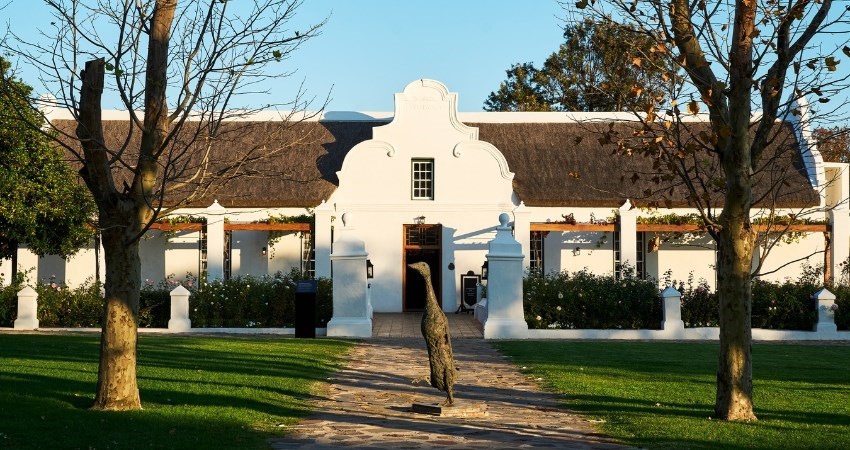
This old farm, a tapestry woven with the threads of historic families and centuries of dedicated craftsmanship, stands as a proud reminder of the lives connected to the land. Stepping onto Vergenoegd Löw Wine Estate is like walking directly into the pages of a living history book. Established in 1696, every ancient vine and weathered stone whispers tales of generations past.
From the moment I arrived, a thoughtfully crafted itinerary ensured that every moment of my stay would be deeply meaningful, leaving me touched by the tailored care that went into making my time here so extraordinary. As I walked into my gabled Cape Dutch cottage, I was amazed by how effortlessly the interior spaces connected to the sprawling landscape outside.
Set completely away from the main farm building – giving me the distinct feeling of staying in a private, historic village – the spacious and elegant design masterfully paired old-world rustic charm with contemporary, five-star luxury. Sitting on my veranda as the afternoon light softened, listening to the gentle rustle of the vines, I felt the travel tension begin to melt away.
A coastal-kissed sanctuary
Situated at the scenic gateway to Stellenbosch, Vergenoegd Löw Wine Estate is a rare sanctuary bathed in serenity, heritage, and natural beauty. Dating back over 330 years, it is one of South African winemaking’s oldest working treasures, operating as a flawless convergence point where history, culture, and ecological harmony meet.
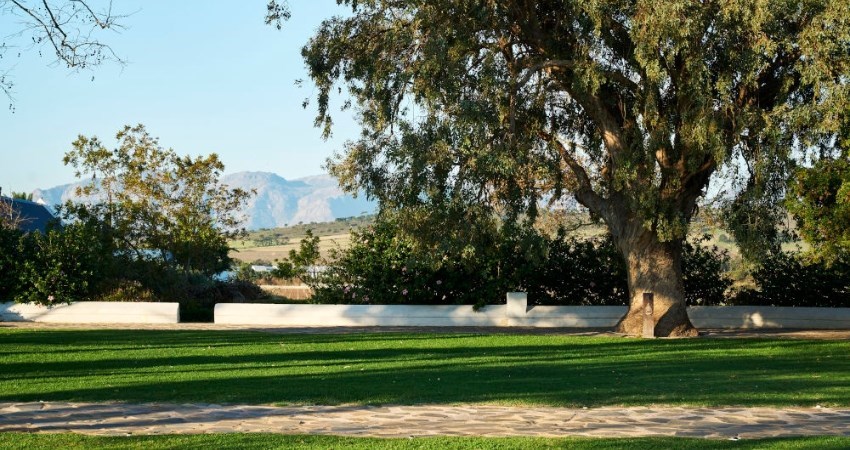
For me, the true romance of this exquisite estate lies in its magnificent natural surroundings, where rugged mountains, manicured wetlands, and flowing rivers meet the Atlantic Ocean. Framed by dramatic, panoramic backdrops of Table Mountain and the Helderberg range, the estate offers postcard-perfect vistas from every angle. Remarkably convenient for international travellers, it is just a 20-minute drive from Cape Town International Airport, located along the celebrated Stellenbosch Wine Route and a mere five kilometres from Somerset West.
Because the farm is located on an expansive plain opening directly to the coast, it benefits from a distinctly, maritime microclimate. The dramatic meeting of chilly currents from the South Pole and the warm landmass causes high winds that blow onshore during the day and offshore at night. I learned that these winds naturally ‘blow dry’ the grapes, preventing fungi, while the high salt content in the air acts as a natural antiseptic for the vines – a masterclass in working with nature.
A vision of global heritage and regeneration
The property is a proud member of the prestigious European Heritage Project collection – a portfolio of privately owned historic estates stretching across Italy, Germany, and Malta. This global connection is entirely due to the visionary stewardship of Professor Dr Dr Peter Löw, a German historian, entrepreneur, and philanthropist. When he purchased the neglected farm in 2015, he discovered a complex of early buildings that, though dilapidated, remained remarkably intact. Sensing its immense cultural, historical, and viticultural potential, he stepped in to champion its resurrection. Under his precise guidance, the farm works in perfect harmony with the rhythms of the earth to produce some of the finest grapes imaginable.
Click HERE to read the full article.