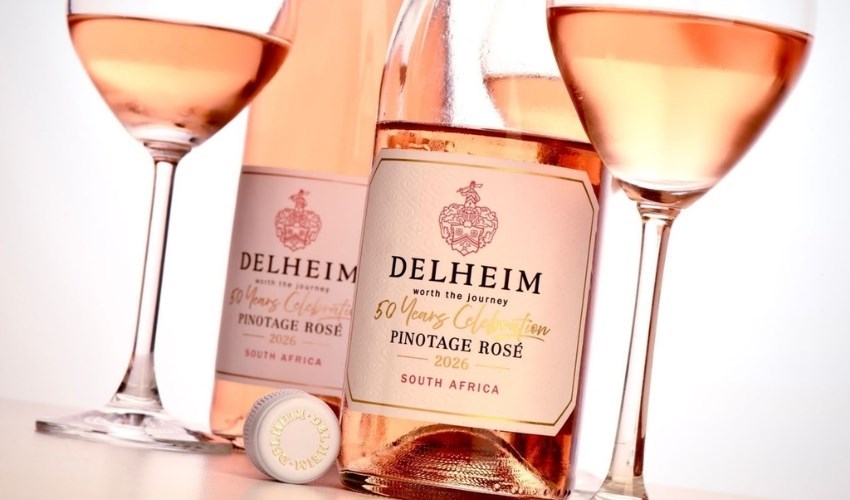
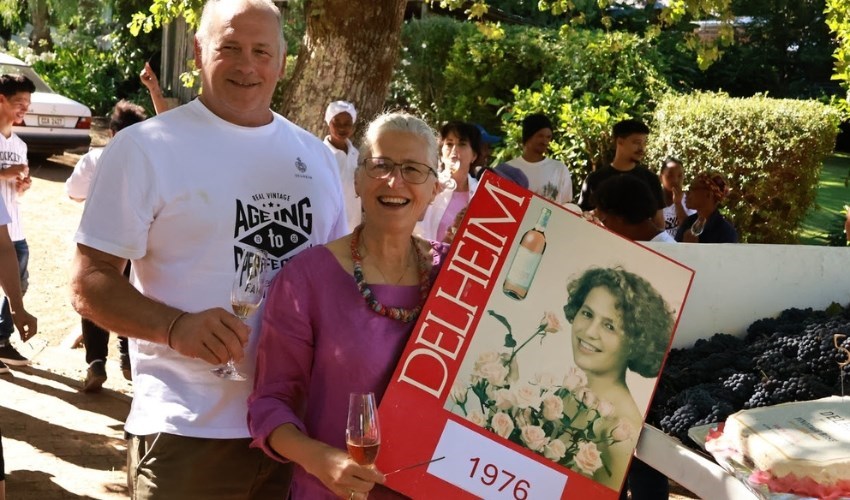
Stellenbosch's pioneering Delheim Wine Estate marks another milestone in its illustrious history this year with the 50th anniversary of its Pinotage Rosé, South Africa’s first rosé wine made from Pinotage, which was made under the Delheim label in 1976.
From that maiden vintage, made under the auspices of pater familia Spatz Sperling, Delheim Pinotage Rosé has for five decades been one of South Africa’s most popular rosé wines.
“For my father, his wines were like his children in that he would never express to having a favourite,” says Nora Thiel, director at Delheim. “But he definitely had a special fondness for Pinotage, planting the variety in the 1950s and in 1960 bottling an estate-made Pinotage – one year after the release of South Africa’s first commercial Pinotage wine.“
The famed Delheim Pinotage Rosé was, in fact, born out of adversity. In the middle-1970s, a substantial red wine lake had formed in South Africa, with more red wine – including Pinotage – being produced than what the market could absorb. Restrictions on international exports from South Africa due to the economic climate, did not help either.
However, cometh the hour, cometh the man…or in Delheim’s case, the men. Otto Hellmer, a German winemaker who was at the time working with Spatz Sperling at Delheim, proposed using a portion of the estate’s Pinotage grapes for creating a revolutionary rosé. This wine was also inspired by the light-red German Trollinger wines from Württemberg, leading to a win-win situation: using excess red grapes to craft a wine – rosé – with a totally different flavour profile than the standard red Pinotages flooding the market.
“However, in 1976 when the first Delheim Pinotage Rosé saw the light, the rosé market was different to what it is today, in that consumers wanted a sweetish, fruity rosé,” says Nora. “The Pinotage component was thus blended with 20% Muscat wine, offering a tantalising semi-sweet wine that consumers enjoyed from the very beginning, placing Delheim at the forefront of the relatively new South African rosé market.”
As rosé styles and tastes changed over the decades, Delheim remained at the forefront of the rosé offering, adapting its style towards the lighter, onion skin colour reminiscent of the great rosés of Provence in France, as well as reducing the Muscat and thus allowing the dry, vibrant and refreshing character of Delheim Pinotage grapes to shine through.
Delheim also played a role in the image or of rosé shifting from that of a “ladies’” wine meant for summer sipping, to that of a wine enjoyed by all, and at any time of the year.
“Looking back in history, it can be said that Delheim helped benchmark rosé as a formidable part of South Africa’s wine offering, leading to many other producers to begin making rosé for this growing market,” says Nora.
In the early years of Delheim Pinotage Rosé, it was also important for Sperling to get the rosé onto the market early in the year of harvest – end of March or beginning of April. He believed Delheim Pinotage Rosé had to be enjoyed in a fresh, invigorating and life-affirming state, Sperling being a firm proponent of wine being made for food, hospitality and enjoyment.
Adding to this spirit of wine irreverence and fun, was Sperling’s annual “competition” with his friend Frans Malan of Simonsig as to who would get the season’s first wine onto the South African market. This was an annual jostle between Delheim Pinotage Rosé and Simonsig’s Chenin Blanc Nouveau, a good-natured wager between two icons of South African wine who were also founder-members of the Stellenbosch Wine Route in 1971.
Later, the “competition” cooled off as Sperling – forever the eyer of the marketing gap – timed the release of his Pinotage Rosé to coincide with Mother’s Day.
“The annual launch of our Pinotage Rosé was taken very seriously, albeit in a mood of festivity,” says Victor Sperling.
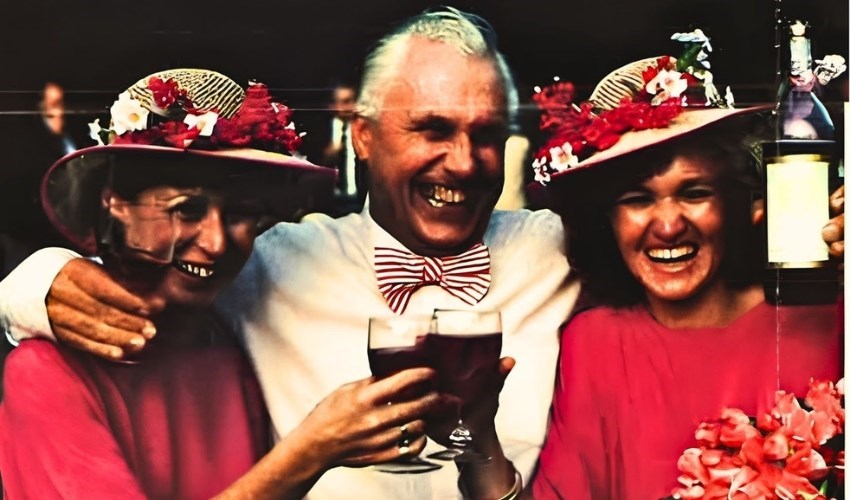
“My father would travel around the country with freshly bottled cases of Delheim Pinotage Rosé, hosting lunches to celebrate the introduction of this wine to hoteliers, restaurateurs, the wine trade and members of the media. He’d don a pink shirt and pink bow-tie, ensure the respective launch venues sported vases brim-full of pink roses and also invite guests to wear pink. It was a true happening and a show and a highlight of the South African wine calendar hosted by Delheim’s walking, talking and joking marketing phenomenon.”
Besides the festivities and fun, Delheim Rosé has from the outset gained a reputation as a quality wine, and was the first South African rosé to be given the wine industry’s Superior Seal of exceptional quality.
“Rosé’s image as a brisk, approachable and fresh wine is what makes it such a popular wine, even in today’s market where general wine consumption is shrinking globally,” says Roelof Lotriet, cellarmaster at Delheim. “But this does not mean quality and attention to detail during vinification are not vital components in the process. For our Pinotage Rosé we use grapes grown especially for the making or rosé, as fruit quality and meticulous vinification are vital in obtaining the desired colour, flavour-profile and freshness.”
The rosé fruit originates from trellised vineyards with a cooler microclimate that ensures freshness.
Grapes are harvested at between 21° and 22° balling. The fruit is immediately pressed allowing a brief kiss of colour from the purple-pinotage skins to shade the juice, which is then fermented for 14 days at 17.5°C. After a month on the lees, the wine is blended with a hint of Muscat to add the secret touch to the famous Pinotage Rose flavour profile.
A slight blush onion skin colour, a bracing aroma of blossom and citrus, followed by the taste of berries, minerality and a bracing maritime energy has made Delheim Pinotage Rosé an institution. And with 50 vintages on the scoreboard, the wine has also made history for one of the Cape’s revered and authentic family wine estates.
The 50-year celebration edition of Delheim Pinotage Rosé 2026 is now available at a recommended retail price of R130. Shop it online or at the Delheim Tasting Room.