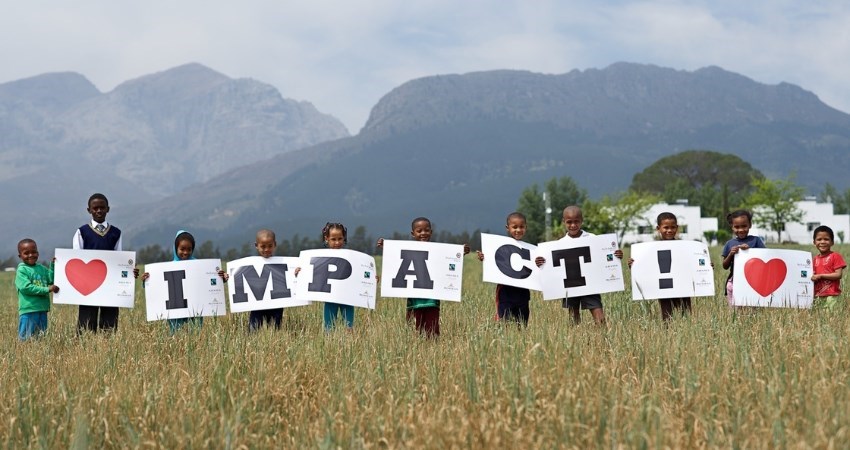
“For centuries we have lived together, worked together, and cared for each other on the land we love, passing on values and skills from one generation to another, over and over again. For us, creating opportunities for advancement within our community, and conserving our environment are not simply good ideas, it is our way of life.” - Petrus Bosman
By now, the story is well-known: Bosman Family Vineyards is an inclusive business model where 26% of the entire business and land is owned by the working community living on the farm. But how does that translate into ‘wine for good’? The obvious answer would be that as shareholders, the working community benefits directly from the sale of Bosman wines.
But the story is much more complex. While dividends are paid out annually to shareholders, so much more is done to positively impact the lives of the 3000-strong community living on the farm.
Let’s start at the very beginning.
At Bosman Family Vineyards, we understand that healthy soils produce healthy grapes, which make good wines.
Our work on environmental regeneration is unceasing. We are very proud that the Upper Hemel-en-Aarde farm boasts Conservation Champion status underwritten by the WWF. Currently, 28% of our land is under conservation management.
On the Wellington farm, similar initiatives are taking place. Our overarching focus is to farm regeneratively in all aspects and to do this we are continually implementing new methods to farm that will conserve our resources and promote soil health.
Here is a quick overview of our initiatives:
- Dexter cows graze between the vineyards in the winter months, keeping the cover crops in check and spreading beneficial micro-organisms through their waste.
- By using organic fertilisers, we are increasing the carbon levels of our soils.
- We have created eco corridors that allow beneficial insects and plants the ability to multiply and migrate.
- Cover crops are planted between the vineyards to sequester carbon, enhancing biodiversity, diminishing water evaporation, preventing erosion and fixing nitrogen in the soil.
- A drone sprays hard-to-reach, high-lying vineyards, decreasing reliance on diesel-guzzling tractors that erode and compact the soil.
- Vineyards are irrigated by gravity flow with the installation of a 3.5km pipeline from our dam higher up in the valley.
- 50% of our water requirement is stored in dams located across our farms.
- Solar panels supply 50% of our electricity needs at 450 kVA/h.
- Energy-efficient lighting: All lights in our cellars and warehouses have been changed to LED.
- Insecticides are kept to a minimum. Instead, natural predators combat pests such as mealie bug and thrips.
- Plant waste is chipped and applied as mulch to our vineyards to decrease evaporation.
- Carbon Heroes accreditation: In 2021, we became an accredited Carbon Hero through the Confronting Climate Change initiative. This in-depth, exhaustive report measures our carbon footprint annually and gives us a baseline from which to work.
- Living Water is a project driven by Bosman Wines to eradicate water-hungry alien vegetation over 150 hectares of mountainous land above our vineyards in Wellington. Already two springs, with excellent quality water, are bubbling out of the mountainside, providing clean water to over 150 households living and working on the Bosman farm, as well as for the 185 children attending the crèche and aftercare at the Bovlei Learning Centre.
- Fynbos conservation: At the Bosman farm in the Upper Hemel-en-Aarde Valley near Hermanus, we currently have 179 hectares under conservation management. There are around 350 identified indigenous fynbos species on the farm, which are proactively conserved.
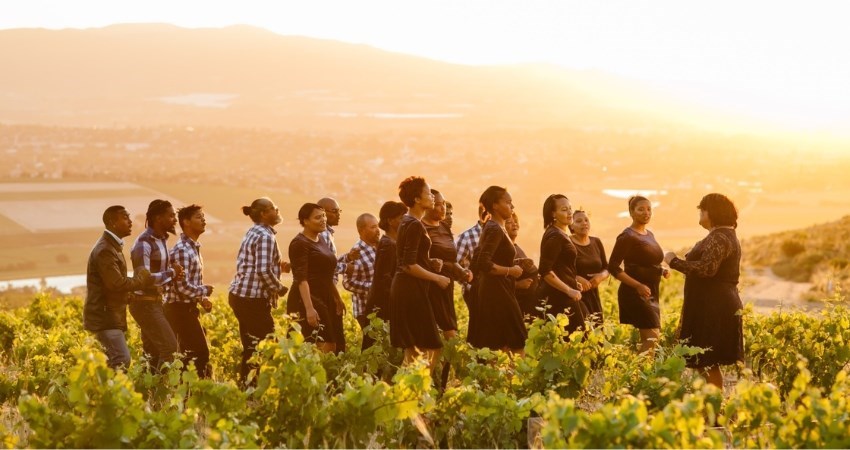
While the Wellington farm has been in the Bosman family for 8 generations, since 1810, we can trace our community almost as far back. A heritage of care is coupled by generational knowledge passed down from a community fully invested in the natural rhythms of farming. Our grapes are hand-picked by a community that has lived and worked on our farm for multiple generations. They know what they’re doing and are irreplaceable by machines.
Our understanding of wine production goes back even further than the vineyard. As both a vine grafting nursery and a wine producer, we are involved in the entire process from vine to wine. During the winter months, our working community gathers to graft vines onto disease-resistant rootstock for the entire grape industry. In fact, the Bosman Adama Vine Nursery grafts 12 million vines per year. While this process is mostly done by hand, cutting-edge technology is applied in our Plant Improvement Facility to ensure we provide healthy plant material for clear varietal character for ourselves and our customers.
Farming and winemaking are both unrelenting enterprises. Working with nature requires long working hours and an unselfish dedication to quality. This focus is enabled by the Bovlei Learning Centre, where excellent care is provided for every child on the farm. Parents can give their full attention to the tasks at hand, knowing their children are secure, nurtured, fed, and stimulated from dawn to dusk.
Currently, there are 95 children in the crèche who are minded by 9 qualified teachers who receive continuous training and curriculum support by the Pebbles Project, an NPO focusing specifically on education, health, and nutrition on farms. These children go on to the government primary school nearby, but once the bell rings at the end of the school day, they return to the Bovlei Learning Centre for Aftercare. Here, there are an additional 6 teachers that provide food, homework supervision, teach computer skills, and host karate and dance classes. These children are monitored and assessed each term so that their educational needs can be met.
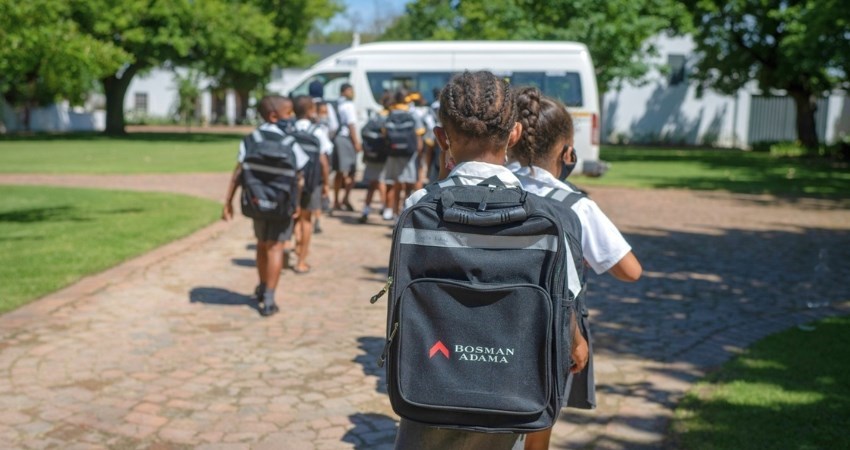
High school learners receive guidance in terms of subject choice, and then later on, they are assisted in their applications to tertiary institutions. Currently, we have 3 students studying at Boland College, and another 3 are studying education at CPUT, while our graduates have all found good positions on the farm or with local businesses.
At Bosman Family Vineyards, wine is good. Made by good people working with good soil on the land they love, goodness is always the guide.

Good news stories abound in the South African Winelands. The #wineforgood campaign, launched by wine.co.za in June 2016, is all about sharing these uplifting stories. We dedicate the month of April to our #wineforgood campaign each year, sharing a good news story every day. Join us in spreading the good news about South African wine. If you'd like to submit a story, please email editor@wine.co.za. For more stories, visit www.wineforgood.co.za.