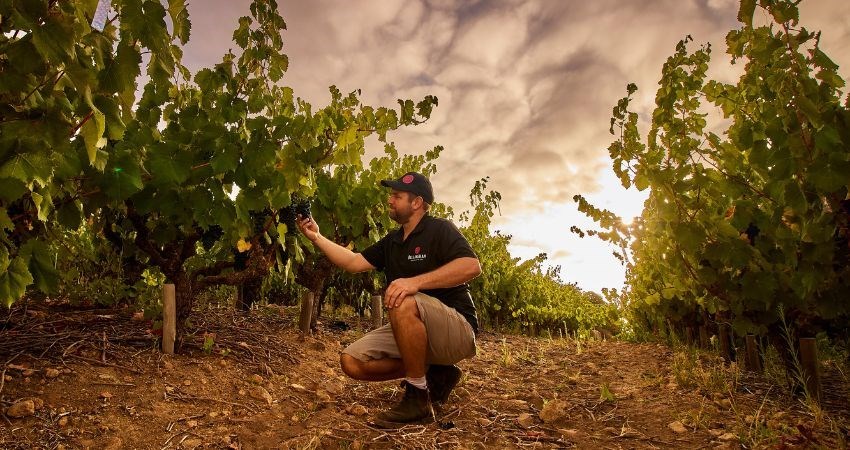
The Bellingham 2026 harvest did exactly that. White grape picking began on 29 January with dryland Sauvignon Blanc from Darling for the Freda White Blend, while the red harvest had already kicked off a day earlier with Pinotage - an uncommon turn of events that immediately set the tone for the weeks ahead.
From the outset, this was a season that demanded attention. For head winemaker Richard Duckitt, who leads the reds, and Ricardo Cloete, who heads up the whites, timing mattered at every turn.
A winter that gave, a summer that pressed
Every vintage begins long before the first fruit reaches the cellar. In 2026, it began in winter - one of the coldest in more than a decade - when cold, dry conditions settled over the vineyards and gave the vines a proper period of rest. As Ricardo explains, “A cold and dry winter provided good hibernation for the vines to rest and accumulate new reserves for the following growing season.” That early dormancy laid the groundwork for everything that followed.
A warm, dry spring shifted the pace quickly. Some vineyards required irrigation to survive the drought, sugar levels rose quickly, and the first fruit arrived earlier than expected. In the red blocks especially, ripeness moved unevenly, with Richard noting differences of up to two degrees Balling between bunches on the same vine.
An intense heatwave in early March brought another spike of pressure, though fortunately most of the red vineyards had already been picked by that point.
The dry weather kept disease pressure low and fruit quality high, while vineyards closer to the ocean benefited from a slower ripening curve and longer hang time. It was a compressed harvest, but not an unruly one. Freshness held, flavour developed steadily and balance stayed intact.
Once again, old vines proved their worth. Deep roots, natural equilibrium and better self-regulation gave them a clear advantage in a dry, fast-moving year - bringing a steadiness that only comes with age.
When the reds arrived first
2026 marked the first time in Richard’s 20 years of winemaking that red grapes were harvested before the early whites. “We started harvesting on 28 January with Pinotage,” he says. “This same vineyard was harvested on 13 February in 2025, highlighting how early this vintage is.”
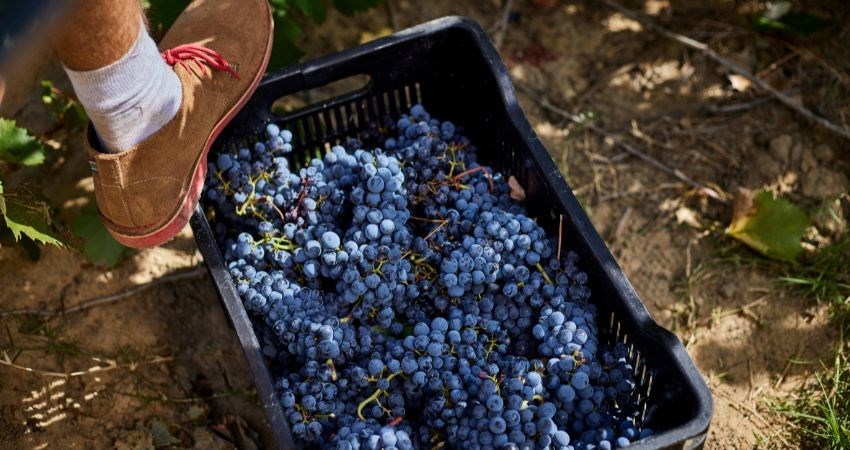
The red harvest closed on 19 March with Merlot from Darling, the fruit showing good depth and balance. Pinotage once again made up the majority of the red crop, followed by Shiraz and Merlot, with smaller experimental lots including Marselan and Alicante Bouschet.
For Richard, the old bush vines behind the Bernard Series Bush Vine Pinotage remain central to the wine’s identity. “The crop yields are naturally lower and the berries generally have more concentration,” he explains. “Older vines ripen better physiologically at lower sugar levels, allowing us to harvest ‘ripe’ grapes with a good natural acidity and lower potential alcohol.”
That combination of ripeness, freshness and lower alcohol is a big part of what gives the wine its shape - and what keeps the style fresh, poised and true to itself.
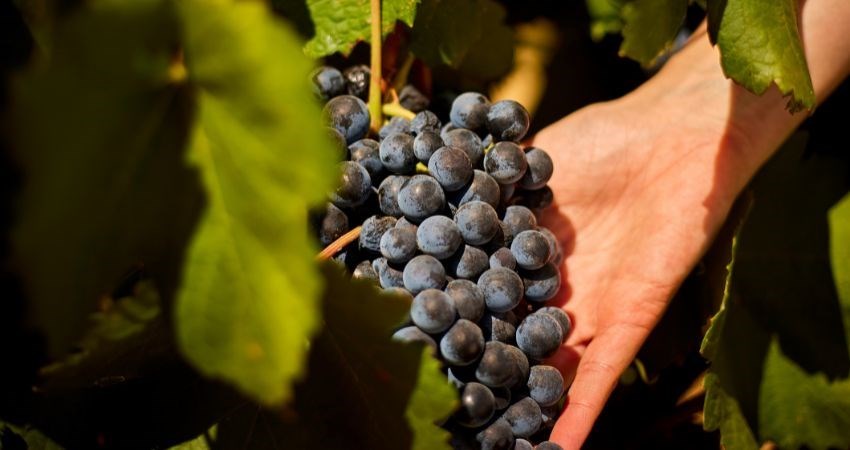
“The reds have good concentration and colour due to the small berries,” says Richard. “The tannins are well-rounded, and I do think the ageability of the wines will be very good.”
Chenin, in fine form
The white harvest opened with Sauvignon Blanc from Darling and concluded on 24 February with Old Vine Chenin Blanc from Durbanville.
Fruit arrived from vineyard sites across Darling, Durbanville, Stellenbosch, Paarl, Philadelphia and the KOO Plateau, spanning Sauvignon Blanc, Chardonnay, Grenache Blanc, Albariño, Chenin Blanc and Viognier. Total white tonnage reached 532 tonnes - around 75 tonnes more than in 2025 and in line with 2024.
The dry, warm conditions yielded smaller, more intense berries, while careful vineyard management supported excellent flavour development throughout. Early leaf removal, crop control, selective irrigation and hand harvesting all played a role in bringing the fruit in at the right moment.
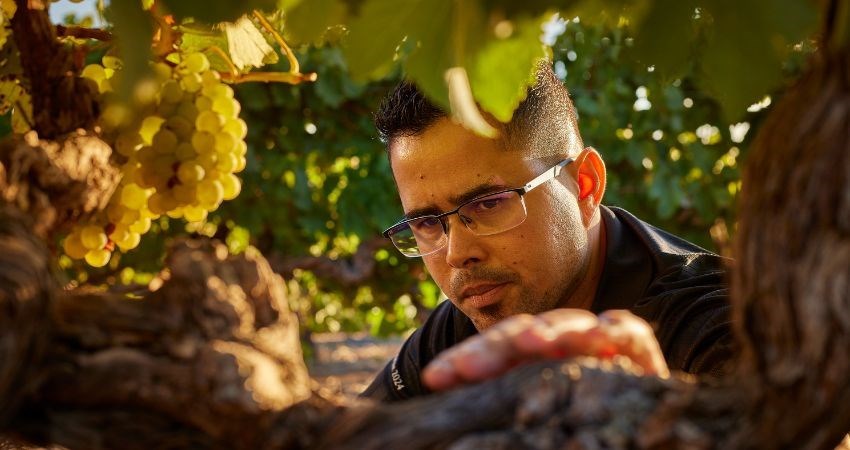
Many of the Chenin Blanc parcels are old bush vines, and they handled the year particularly well. For Ricardo, the reward was seeing just how well they had come through. “The indescribable feeling of walking into those blocks and seeing perfect, healthy grapes,” he says. “That’s what this harvest gave us.”
Of the wines currently in cellar, one stands out for him already: the Bernard Series Old Vine Chenin Blanc, built from old-vine parcels across Darling, Durbanville, Stellenbosch and Paarl.
Among them, the Cape Town block in Durbanville is showing especially well. He describes it as: “fresh, clean, fruit-forward with complex aromatics that include delicate stone fruit and tropical fruit. Concentrated fruit, juicy and seamless on the palate.”
Precision carried through into the cellar, too.
Experiment with intent
A fast harvest tends to sharpen focus in the cellar. In 2026, it also opened the door to exploration.
On the white side, Ricardo continued to experiment with new barrel cooperages and wood, alongside wild ferments in Clayver ceramic pots. One of the more notable developments this harvest was the first ceramic fermentation of Grenache Blanc for the Pandemonium range - a move entirely in keeping with Bellingham’s instinct to look beyond the obvious.
Richard, meanwhile, expanded several of his red winemaking trials: whole-bunch Syrah fermentations at 50% and even 100%, sun-dried stalks to enhance spice and texture, partial carbonic maceration, wild ferments, red fermentation in barrel and comparative trials involving longer cold soaks and extended maceration.
As Richard puts it, the outcome is always “99% vineyard and 1% winemaker”. It is a philosophy that runs through the cellar: work carefully, interfere less and allow the vineyard to speak as clearly as possible.
Shared space, shared rhythm
For all the romance of harvest, some of the most important work is gloriously practical.
Red and white fruit arrived in close succession - and in some cases simultaneously - placing real pressure on tank space and timing. Certain wines required specific tank sizes, which meant constant coordination across the cellar.
Richard and Ricardo worked side by side through it all - whether making space for an incoming lot, weighing up a ferment or asking for another pallet on a wine in progress. Late-night shifts and divided weekend work helped keep the season manageable while standards remained high.
There is mutual respect at the heart of it all. Ricardo describes working alongside Richard as “a privilege”, adding simply: “Iron sharpens iron.”
A vintage worth watching
This was an early harvest, defined by pressure and precision - and plenty to be excited about.
The Bernard Series Old Vine Chenin Blanc and Bush Vine Pinotage are already showing real promise, while the wider portfolio - from Albariño and Grenache Blanc to the depth and structure emerging in the reds - points to a vintage with impressive range across Bellingham’s three core collections.
For Ricardo, the season was “challenging, yet won”, while Richard summed it up as “Dry. Early. Balanced.”
The sentiment feels fitting, as Bellingham has always been at its best when things don’t quite behave themselves. If the cellar is any indication, 2026 is already beginning to reveal its hand.
At Bellingham Wines, we craft, and you enjoy.