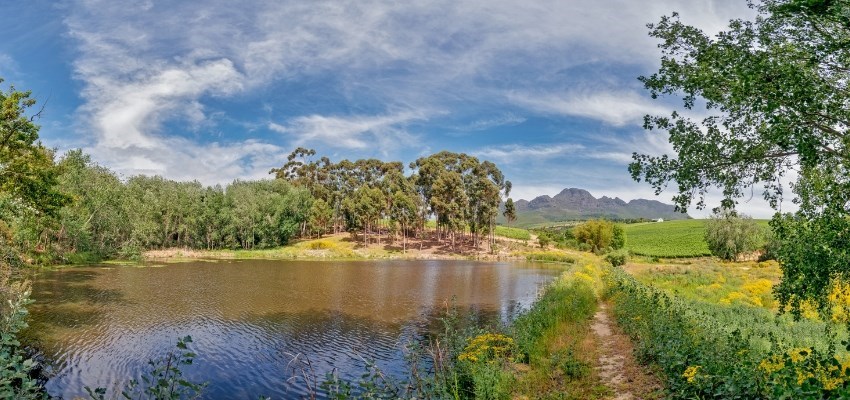
It’s about understanding that great wine begins long before the cellar, rooted in healthy soils, responsible practices, and a deep respect for both people and place.
With four cellars, our own vineyards, and a network of trusted growers, our approach to sustainability is both collaborative and considered. In the vineyards, we focus on regenerative and low-impact farming methods that prioritise long-term soil health and biodiversity. Indigenous flora is restored, natural habitats are protected, and chemical inputs are minimised in favour of more natural solutions. Practices such as cover cropping, composting, and careful vineyard management not only improve soil structure but create an environment where vines can thrive more naturally and resiliently.
This commitment to conservation is particularly evident at Rust en Vrede and Stellenbosch Reserve, where designated areas of land are actively protected and maintained to support biodiversity. These efforts form part of a broader vision, one that recognises the role wine farms play in preserving the ecological integrity of the Stellenbosch region.
Water and energy are managed with the same level of intent. Drip irrigation is used only when necessary, while certain vineyards thrive entirely under dryland conditions. Wastewater is treated, monitored, and reused, ensuring minimal environmental impact. In the cellar, solar energy now contributes significantly to daily operations, reducing reliance on traditional power sources and lowering overall carbon emissions. Ongoing improvements in energy efficiency – from cooling systems to equipment choices – further support this transition.
Equally, waste reduction and circular thinking are embedded across the production process. From recyclable packaging and lightweight bottles to renewable and biodegradable closures, each element is designed with its full lifecycle in mind. Materials used during production are reused wherever possible, reinforcing a system that values efficiency as much as environmental responsibility.
These practices are supported by recognised industry frameworks such as Integrated Production of Wine (IPW), under which all wines in the collection are certified. In addition, estates like Rust en Vrede and Stellenbosch Reserve are accredited by Wine and Agricultural Ethical Trade Association (WIETA), ensuring fair labour practices and ethical standards are upheld alongside environmental stewardship.
Sustainability also extends beyond the vineyards and cellars into the communities that surround them. By supporting local businesses, investing in skills development, and contributing to organisations such as Huis Horizon, Rotary International, Heartlands Baby Sanctuary, Choose Children Project and The Cape Hunger Project, the Stellenbosch Collection takes a holistic view of what responsible wine production truly means.
Ultimately, sustainability here is about balance, between innovation and tradition, production and preservation, community and environment. It’s a long-term commitment to doing better, with every harvest building on the last.

Good news stories abound in the South African Winelands. The #wineforgood campaign, launched by wine.co.za in June 2016, is all about sharing these uplifting stories. We dedicate the month of April to our #wineforgood campaign each year, sharing a good news story every day. Join us in spreading the good news about South African wine. If you'd like to submit a story, please email editor@wine.co.za. For more stories, visit www.wineforgood.co.za.