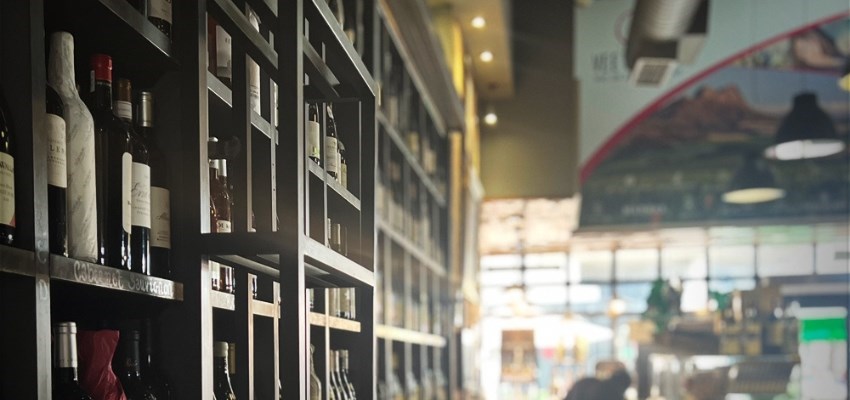
Most of us have a wine we default to. The one we discovered at a friend’s get-together, or spotted on a restaurant’s wine list when we didn't know where else to look, or experienced a wine tasting years ago on a family holiday and just decided “this is my go-to wine”. And then just kept buying that old faithful. It's reliable. It's there. It fits the budget. But somewhere along the way between the third and fourth time of buying the same familiar bottle, a small question tends to creep up: is this actually the best we can do?
The answer, it turns out, is a quiet and rather delightful no.
Here's something worth sitting with: nearly three-quarters of South Africa's wine producers are, by industry measure, small. But, walk into any bottle store, you'd never know it. The shelves tell a different story: the same names, the same slick label designs, the same comfortable choices lined up neatly in a row. Somewhere between the vineyard and the shelf, most of the interesting stuff gets lost in the supply chain.
The small batch producers, the ones making under 2 000 cases a year, the ones you find at a quaint wine store or contemporary wine bar, or at an industrial-cool wine tasting event where the producer is standing right there talking about soil composition and children's stories in the same breath, exist in an entirely different conversation.
They're small, deliberate, too busy doing something genuinely original to compete for supermarket shelf space. And honestly? That's exactly what makes them worth finding.
So, what does “small batch” actually mean?
Ask three wine people what "small batch" means and you'll get four different answers. Officially, the wine industry tends to call anything under 10,000 cases a year boutique, though that still covers a lot of ground. Zoom in a little further and you find the really interesting stuff: producers making between 50 and 3 000 cases a year, sometimes far fewer. South Africa's own Garagiste Movement, which has been championing artisan winemakers since the mid-nineties, draws the line at 9,000 litres per vintage, around 12 000 bottles. To put that in perspective, some commercial wineries produce more than that before lunch.
The annual case count is almost beside the point. What small batch really means, what it's always meant, is care. The unhurried, unglamorous, deeply personal kind. The kind where someone has made a hundred small decisions about a single wine that nobody will ever know about, and made them well anyway. They taste from the barrel not because it's scheduled, but because they're curious. That kind of attention has a flavour, and you can taste it.
So, who are the producers actually doing this? And to be honest, the labels will draw you in: considered, personal, and beautiful. You might not recognise the names, but the wine? The wine will make you pause and want to stay a little longer. Here are five worth knowing.
Yo El Rey
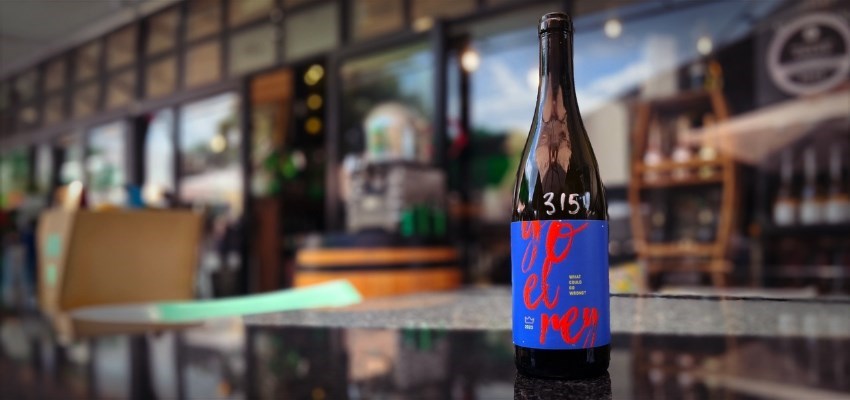
Yo El Rey What Could Go Wrong? Sauvignon Blanc 2022
When a young Pablo Picasso signed an early self-portrait with the tagline "Yo El Rey", Spanish for "I, the King", he wasn’t being arrogant. It’s defiance rooted in certainty. It’s that same quiet certainty that runs through Angelo van Dyk’s small batch wine project, born from a shared cellar in Simondium and twelve years of living and learning in London.
A South African winemaker who cut his teeth at Waterford Estate before heading abroad, Angelo founded Yo El Rey in 2018 with a modest 1 700 bottles of Syrah-Grenache. Today he produces around 7 000 bottles across a small range, working exclusively with chemical-free, négoce fruit sourced from a trusted network of growers across the Cape who share his commitment to farming with the land, not against it. Nothing fancy, nothing flashy. Low intervention in the cellar, old oak, and a philosophy built on approachability and honesty.
A wine that refuses to sit still, the "What Could Go Wrong?" collection is an unpredictable experiment released each year. A different grape, a fresh idea, a different question answered in a glass. Not a side project. Just Angelo being Angelo. The Sauvignon Blanc orange wine was a granadilla twist, pop delight layered with a savoury depth. This is wine for people with an adventurous palate who don't need a glossary to enjoy it.
Lalela Wines
A collaborative project from winemaking couple Wade Sander and Natasha Williams, Lalela was born from a simple but profound idea: that wine should tell the stories it has long left out. Heritage varietals. Forgotten blends. The untold histories of the Cape and the people who shaped its winemaking traditions. Natasha and Wade are actively working to source fruit from Black-owned farms across the Western Cape, building a relationship carefully and intentionally. Lalela, after all, means "come listen" in Zulu. And that, precisely, is what this wine asks you to do.
Their Cinsault is the wine that made me stop mid-sip and pay close attention. Soft ruby, bright with ripe cherries, a delicate floral lift, and a smooth, lightly savoury finish that lingers just long enough to savour the moment. It’s the kind of wine that just quietly refuses to be ignored.
Serve it slightly chilled. This wine is an invitation to lean in, sit a little closer, then listen to the untold stories of heritage, tradition, and the people who built the Cape's wine culture.
House of Hier
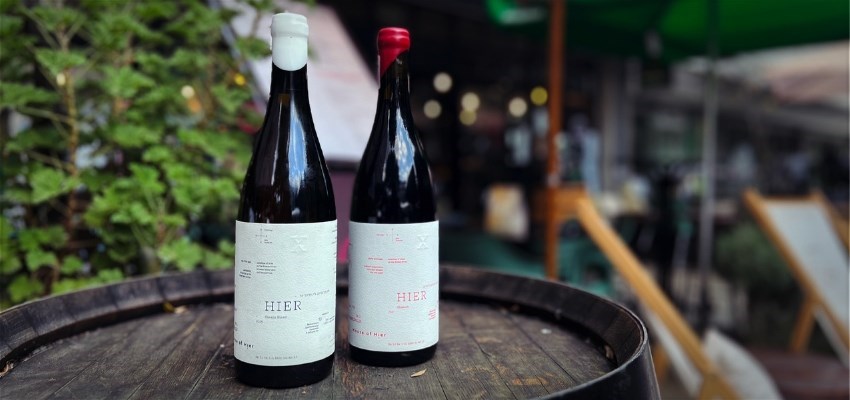
House of Hier Chenin Blanc 2023 and Cinsault 2021
House of Hier is a collaboration between Robertson winemaker Lourens van der Westhuizen of Arendsig and entrepreneur Jaco Pienaar, and their entire range is a Cinsault and a Chenin Blanc. No sprawling portfolio. No hand-drawn illustration of something rustic and European-adjacent on the label. The Cinsault, predictably, is already sold out on their site which tells you everything you need to know about what kind of wine this is. If you see a bottle of the Hier Cinsault out in the wild, add it to your wine rack.
Their Chenin Blanc earned 93/100 from Christian Eedes of Winemag on its maiden release, just 1,200 bottles, from a now 32-year-old block on calcareous clay in the Robertson valley. Three consecutive 4.5-star Platter's ratings since suggest this isn't a project that peaked early. And it deserves every point. Spontaneously fermented and matured for ten months in neutral oak, this is a wine that rewards patience, both in the making and savouring the wine. Aromas of peach, apricot, and dried herbs open gently from the glass, layered with a touch of honey and a quiet nuttiness that deepens with time. The palate is rich and broad, with good depth of fruit held in check by fresh acidity and a finish that lingers long and intensely savoury.
Serve the Chenin Blanc with something worth the occasion. It has waited long enough.
And just when you thought two wines was the whole story, a Merlot-dominant blend is currently ageing in barrel as we speak, due for release later in 2026. This kind of news makes you want to mark your calendar and clear a slot in the rack now.
Storm Wines
After 12 vintages in the Hemel-en-Aarde Valley working intimately with Pinot Noir and Chardonnay, Hannes Storm knew the land soil-deep. He knew its soils, the stony, clay-rich Bokkeveld shale, the decomposed granite, the cool Atlantic influence that gives the wines their precision and nerve. So when he spotted two tiny parcels of exceptional land, he had them planted on a long-term contract, with full say over how they were farmed.
That was 2008. The debut vintage followed in 2012. Today, Storm Wines is the only producer to bottle Pinot Noirs from each of the three Hemel-en-Aarde appellations: the Valley, the Upper Valley, and the Ridge. A detail that sounds technical until you taste the difference, and then it feels like everything.
The Ridge Chardonnay is the one that made me pause: buttery and bright, somehow tasting like both summer and winter in every sip. Citrus peel and wet-stone fruit energy leaning into a cosy, vanilla warmth, like someone pulling something excellent out of the oven. My palate did a full double-take. These are wines made with the kind of patience and attention that you can actually savour.
Small production. Careful viticulture. A constant, considered nod to the Old World. And results that are, quite simply, enthralling.
Eenzaamheid
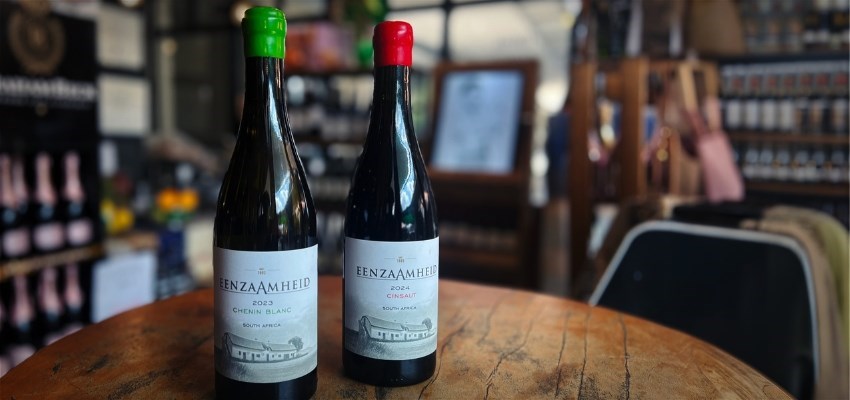
Eenzaamheid Chenin Blanc 2023 and Cinsaut 2024
The name means "solitude" in Dutch, and it was given to this Agter-Paarl farm in 1693, a reference to its isolation from Cape Town when the world moved more slowly and distance meant something different. More than three centuries later, Eenzaamheid still carries that quality: unhurried, deeply rooted, a little apart from the noise.
Janno Briers-Louw is the seventh-generation farmer who tends these dryland vines. He grew up here, studied viticulture and cellar management at Stellenbosch, interned at Rosenblum Cellars in California, worked harvests at Fairview, Spice Route, and Perdeberg – and then came home. The maiden vintage was in 2010. He qualified as a Cape Wine Master in 2016, writing his dissertation on dryland viticulture in South Africa. In other words: this is not someone who makes wine as a side project.
The winemaking process at Eenzaamheid is almost defiantly meticulous. Every cluster is hand-harvested at dawn and hand-sorted. Each fermentation vessel is used only once per harvest. No rushing, no cutting corners. The wine is bottled unfiltered and unfined, then spends a full additional year in bottle before release. Two years from harvest to hands, and it shows. The Chenin Blanc has earned consecutive Platter's five-star ratings and a 95/100 that lingers the way a good conversation does.
Their Cinsaut, too, is something special: light ruby, bright with red cherry and cranberry, softened by gentle spice. The kind of slow-sip wine that makes you forget, briefly, that you have anywhere else to be.
Where to find small batch wines
None of these wines will come and find you. That’s rather the point. You’ll find them at independent wine stores like Vinosity at 44 Stanley in Johannesburg, at events like WineFeast or a jazz and wine tasting event hosted by Vee and Forti in Pretoria, or directly from the producers themselves – some of them you can really just send a WhatsApp to. And in Cape Town, Publik Wine Bar on Kloof Nek Road has been doing this quietly and well since 2013, a love letter to SA's independent producers, poured by the glass.
There's something quietly reassuring about the South African small batch world. It isn't chasing a trend. It isn't trying to scale or disrupt or capture market share. It's just people making wine they believe in, in quantities that mean something, in places with stories worth telling. That's just better, sustainable values with excellent terroir.
So, pour something different. You might just find your next favourite wine is one you’ve never heard of before.
Photos: All photos taken by Saskia Burman.