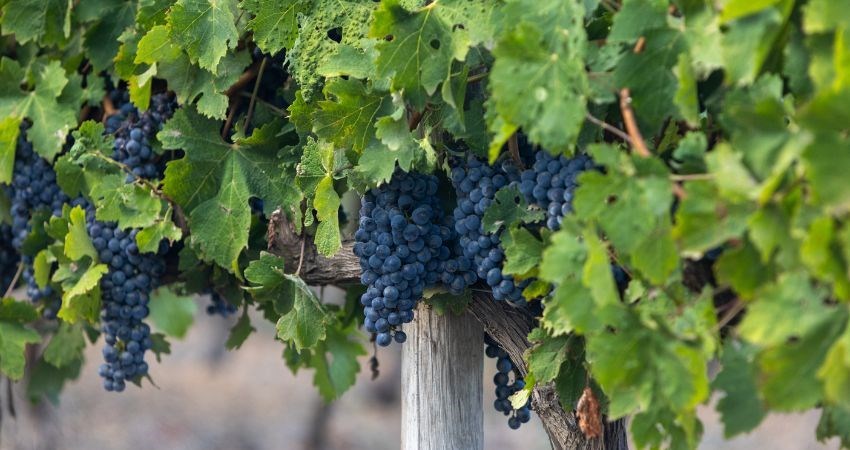
The Franschhoek Valley wakes slowly in summer, light arriving softly before the heat of the day sets in. But in 2026, the vineyards didn't wait. A hot, windswept December brought the season forward and by 21 January, the first fruit - Citrus Hill Chardonnay - was already arriving at the cellar.
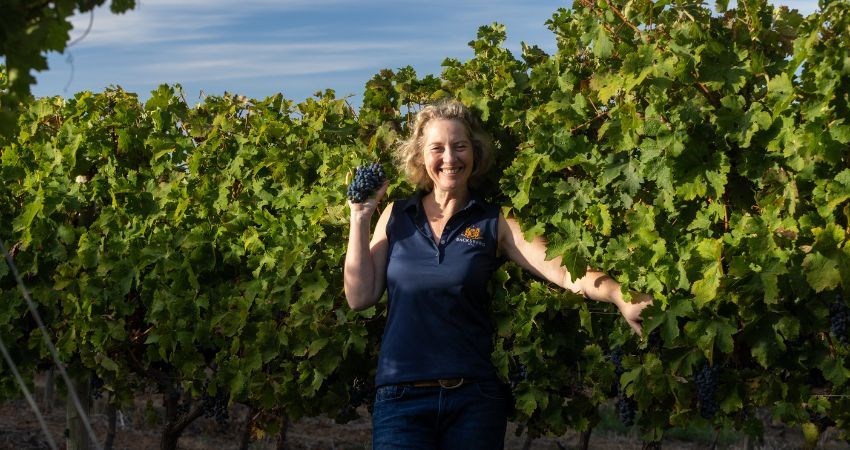
In those early mornings, the pace was set - fruit picked in the cool hours, with decisions taking shape before temperatures began to rise. "We had a very early start," says winemaker Alicia Rechner. "Conditions pushed the vineyards forward and we had to respond just as quickly in the cellar."
New vineyards, same approach
Backsberg now works with a completely different vineyard base, with new sites shaping the wines in recent years. Alicia's guiding principle hasn't changed. "For me, it stays the same: to respect the fruit and the vineyard. Where it comes from becomes my responsibility."
That consistency allows the work to deepen, season after season. Each vineyard is now selected to suit each wine, bringing clarity and precision to the portfolio. Before any fruit arrives at the cellar, Alicia walks the vines - spending time in each site to understand its character that season so that every decision that follows is grounded in what she has seen firsthand.
A season that tested and rewarded
From there, the harvest unfolded early. The whites and rosés followed in quick succession, with Ella Pinotage Rosé, Hillside Sauvignon Blanc and the estate's white wines completed weeks ahead of schedule. Only a handful of later-ripening sites - Smuggled Vines among them - held back in cooler, shaded pockets of the valley, a small reprieve in a season otherwise shaped by extremes.
Heat and wind defined the early weeks, accelerating ripening and placing pressure on irrigation. Keeping fruit cool required constant attention. "Unless the vineyard had natural protection - like mountain shade - everything came in earlier than expected," Alicia notes.
Midway through harvest, conditions shifted. Heavy rainfall was followed by cooler weather, easing pressure at a critical point in the season. "It suddenly felt like autumn," she says. "If the cooler weather holds, it will allow the reds to ripen more gradually, which is ideal."
There were more difficult moments, too. Fires burned through parts of the Franschhoek Valley for extended periods - an unsettling presence during an already demanding season. Smoke lingered in the distance for days, a constant reminder of how quickly conditions can change.
The team monitored conditions closely and the impact of smoke was ultimately avoided. “We were very fortunate,” Alicia reflects. “We did not see smoke taint in the fruit we tested.”
Carrying the harvest forward
Overall yields are broadly in line with previous years, supported by good winter rainfall. Where vineyards came through the season intact, both quality and volume are strong. In others, fire and post-rain rot reduced the crop significantly - a clear reflection of the fine margins that define each harvest.
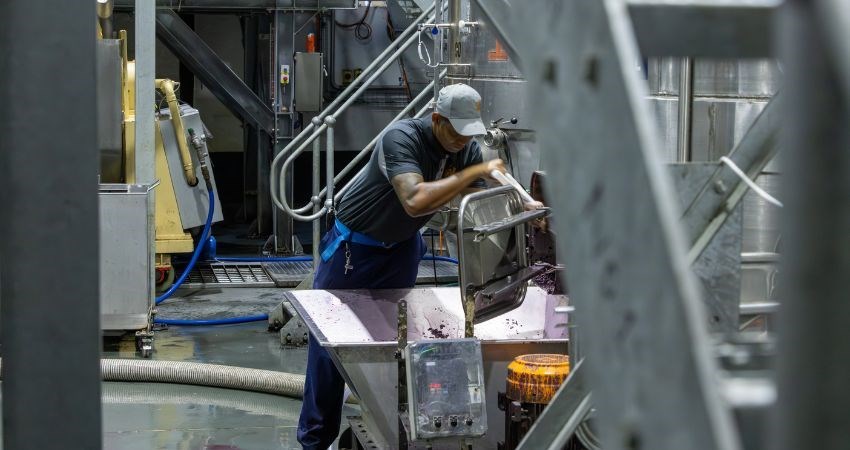
Inside the cellar, the work continues in the same steady motion. Each day begins with preparation - organising fruit intake, readying vessels and monitoring fermentations - before shifting into the focused work of receiving and processing each delivery.
There is little pause between stages - tanks to check, fruit to receive and decisions made in real time as each load arrives in the cellar. "We work around the clock during harvest," Alicia says. "Our role is to guide the fruit carefully so that by the end of each day, we have the best possible wine in tank."
Red wines are now fermenting, with open pump-overs guiding extraction and structure. As fermentations complete, wines are pressed and moved to barrel, marking the transition from harvest to maturation.
"I am always excited by fermentation," Alicia says. "Watching the wine take shape - that never changes."
Care as a practice
As South Africa's first certified carbon-neutral winery, Backsberg has long understood that caring for the land is an ongoing commitment - one that deepens with every passing season. That same spirit continues to guide the work today - a steady process of improvement, year by year.
Recent insulation upgrades in the cellar have already reduced energy demand. "You see it immediately," Alicia notes. "The system works more efficiently. That's what matters."
Small, deliberate decisions made with the long term in mind - incremental changes that, over time, support the health of both the cellar and the land.
The vintage ahead
Alicia describes the 2026 vintage in three words: "Organised. Calm. Efficient."
It reflects a season that demanded constant attention in both vineyard and cellar - met with care and consistency at every stage.
In time, these wines will leave the cellar and find their place at tables, in homes and among friends - a continuation of the work that began in the vineyard months before. For a winery now in its second century, that connection means everything.
From our family to yours.