Winemaking in war time
In the early hours of 28 August 2025, in one of Russia’s largest drone and missile attacks of the war, a drone ploughed into the distribution warehouse of Pilot’s Wines in Kyiv. The explosion left a smouldering mess of twisted metal and shattered glass.
Economic losses aside, ‘nearly all sample bottles that had received Decanter and other awards’ were destroyed, which was ‘especially painful’, company representative Olena Sizarova told Decanter.
‘These bottles were… part of our brand’s history. We planned to use them for professional tastings, masterclasses, staff training and presentations. We wanted Ukrainian consumers to taste the very wines that had been recognised by experts.’
The attack was only the latest in a seemingly endless series of blows to the wine industry in Ukraine. Since the war began, wineries have been bombed, occupied or abandoned. Supply chains have been upended and employees have fled or joined the fight against Russia.
Ukraine’s preeminent sparkling wine producer, Artwinery, had to relocate from the eastern city of Bakhmut, which now lies in ruin. At Koblevo winery in the Mykolaiv region, Russian paratroopers reportedly landed in the vineyards.
At nearby Beykush winery on the south coast, Russian troops are only about 8km away on a strip of land across the water, from where they routinely shell Ukrainian towns and villages.
Yet throughout the nearly four years of grinding war, Beykush has not ceased production, and a new wave of small independent wineries like it are radically reshaping the Ukrainian wine scene.
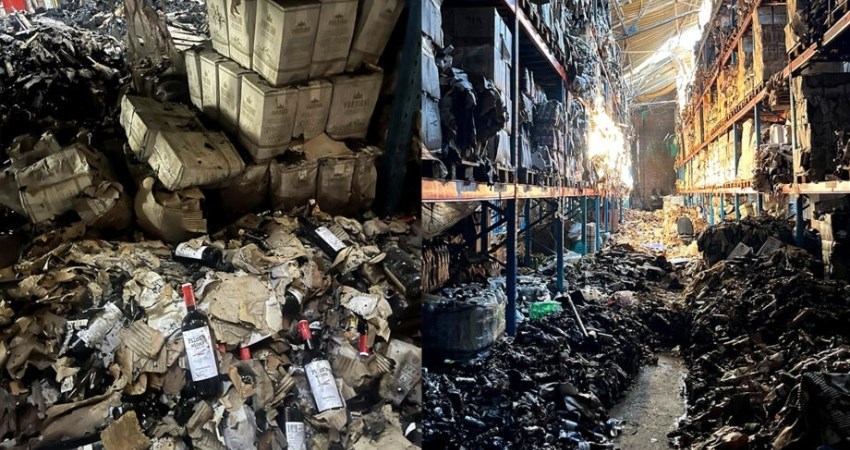
Damage to Pilot’s Wines’ Kyiv warehouse following a Russian air strike.
Finding a way ‘out’
The conflict has not only highlighted the resilience of Ukraine’s wine producers, it has also catalysed change and spurred wineries to look abroad, according to Svitlana Tsybak, Beykush’s CEO and head of the Ukrainian Association of Craft Winemakers.
She recently had to deal with the theft of thousands of bottles of Ukrainian wine in the UK from the back of a lorry bound for London City Bond.
After Russia’s 2022 invasion there were tight liquor restrictions. ‘I decided at the time to switch my focus to export markets, which helped us survive,’ said Tsybak. Other wineries did the same.
‘Before the full-scale war, small wineries didn’t export, except for a few bottles here and there, because the domestic market was the main market.’
In the weeks after Russia invaded, Tsybak, whose husband is a former sommelier serving in Ukraine’s armed forces, frantically set out to find new overseas buyers and promote an industry facing an existential threat.
That year, Beykush was short of staff and couldn’t bottle its latest vintage because of a lack of glass. But the 2022 Decanter World Wine Awards (DWWA), judged in London, were approaching, which Tsybak felt was an unmissable opportunity to showcase Ukraine’s top wines.
Click HERE to read the full article.