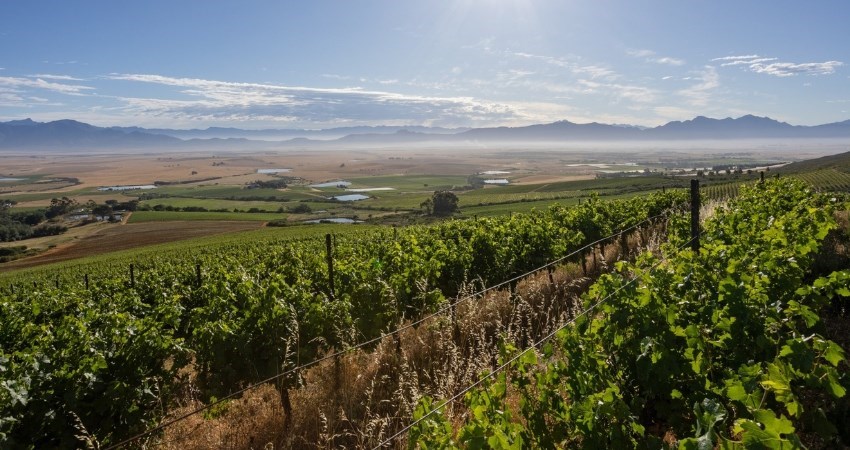
Changing wine making technology fell under the spotlight at wine tastings in 2025. Winemakers chose to showcase wines made using innovative techniques, with a focus on the use of alternate vessels such as Wineglobes, amphora and concrete eggs. The quest for purity of fruit and terroir found expression in an ongoing conversation about the primordial elements of clay, glass, wood, ceramic and concrete. Back to basics.
Glass globes
The release of the first generation of Sauvignon Blanc by Diemersdal Estate and Chardonnay by De Wetshof Estate made in the ethereal new Wineglobes were two of the highlights of 2025. Introducing the new glass wines to media, Juandre Bruwer of Diemersdal spoke about the quest to reduce Sauvignon Blanc to its core, stripping out the thiols and pyrazines by making wine in neutral Wineglobes. In the cellar, we tasted wine from the same vintage and vineyard, maturing in glass, clay amphora, concrete eggs, stainless steel and wood, exploring the distinct evolutionary journey of the same wine in five alternate vessels.
Unveiling the first Chardonnay made in glass globes in South Africa, De Wetshof winemaker Johann de Wet spoke about the advantages of these revolutionary new winemaking vessels. Emphasising the depth and complexity of unoaked Chardonnay, Johann explained how the hermetically sealed glass vessels – unlike porous oak, concrete and clay – allow for the purest expression of the terroir and variety to the full. Sourced from a single vineyard site rich in limestone, the Wineglobes preserve the linearity and precision of Chardonnay. These are key words in the new conversation.

Clay, rooibos and chameleon wines
Cellarmaster RJ Botha and his team at Kleine Zalze Wines demonstrated evolving winemaking techniques at the heart of their iconic Z Project portfolio at a landmark tasting at Terroir in Stellenbosch. Experimenting with a mix of alternate and signature varieties from flagship older vineyards, the cellar has undertaken a journey over the last ten years to develop new wine styles which can be incorporated into its main stable of brands. The focus is on the purity of fruit, layers, textural core and a sense of the origin of the wine.
The original linocut labels of Kleine Zalze’s limited edition Z wines designed by the winemakers tell a story about the landscape where the grapes originate, from the sandstone, oyster-shell, rooibos and fynbos to the Cederberg and the Piekenierskloof. We enjoyed inter alia a tasting of the maiden Z Grenache Blanc 2024 (fermented with wild yeast in concrete eggs), Heritage White Blend 2023 (a unique blend of Palomino, Chenin Blanc and Alvarinho fermented in old oak and clay amphora), and Grenache Noir 2023 (clay amphora and old oak) with its spectacular dwarf chameleon label.
The attention to craftmanship and detail is particularly impressive. The use of the oyster-shell on the label, alluding to the saline minerality of the signature Z Chenin Blanc 2023 made from two old vine heritage vineyards in close proximity to the sea. And the botanical sketch of rooibos on the Z Grenache Blanc sourced from Piekenierskloof. The viticulturist explains they often find twigs of rooibos among the grapes delivered to cellar. RJ Botha says the Z Syrah 2023 (portions of whole-bunch ferment in amphora and barrel) pushes the boundaries – and shows the way forward for Kleine Zalze’s signature red grape. A mega-upgrade of the cellar starts in 2026. Watch this space.
More amphora and eggs over easy
In recent years, every time I walk into a cellar I engage in the art of amphora spotting. Like a bird watcher, I twitch when I spot clay in the cellar, graduating from looking for concrete eggs to the ethereal new glass globes, swirling like an alien hub in the cellar. While I used to play spot the barrel (or foudre), on a learning curve about size, origin (American, French or Hungarian) and toast (blonde or bourbon), I now look for futuristic vessels setting sail for the new world of winemaking. Its geeky I know but there you are.
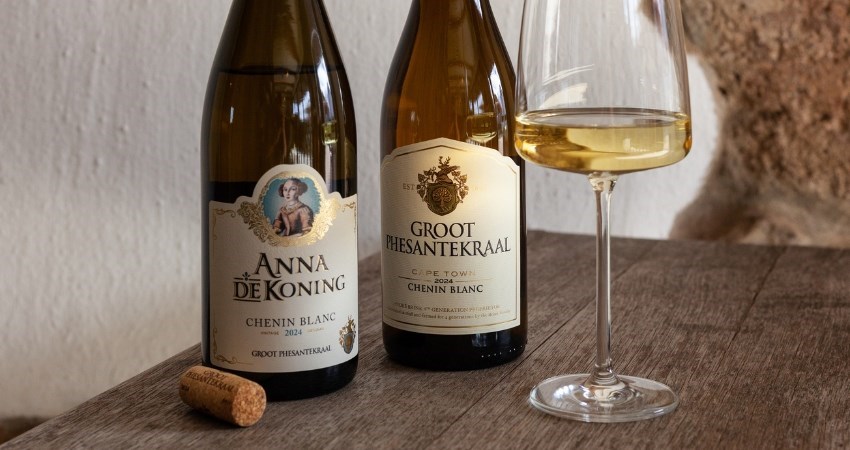
When talented young winemaker Richard Schroeder, on his fifth vintage at Groot Phesantekraal in the Durbanville Wine Valley asked me to a vertical tasting of their flagship Anna de Koning Chenin Blanc, I jumped at the opportunity. Poking around in his cellar, anticipation rises as I spy with my little eye, a scattering of eggs and amphora among all the barrels. It’s like looking for the big five. We got to work tasting samples of their signature Chenin Blanc made in four vessels: steel, concrete, clay and oak.
Richard demonstrated how he likes to build complexity in the award-winning Anna de Koning Chenin Blanc using components from different fermentation vessels. The tasting showed the evolution of their flagship Chenin Blanc away from new oak to the purity of fruit, scintillating acidity and quince character of wine matured one-third in egg, amphora and barrel. You can taste the cool climate delicacy of the terroir. He says the delicate quince and blackcurrant flavours are cool climate – and not the yeast.
Eleven farms, one wine
The release of the Durbanville Pinotage 2024 at Diemersdal to mark the centenary of the creation of Pinotage and the bicentenary of Durbanville was another of the highlights of the wine tasting circuit in 2025. Eleven wine farms – Nitida, Meerendal, Maastricht, Klein Roosboom, Groot Phesantekraal, Durbanville Hills, Diemersdal, De Grendel, D’Aria, Mellish Family Wines (the new kid on the block), and Canto – collaborated on the initiative, contributing grapes to bottle a limited magnum edition to mark the occasion.
The final blend was made by De Grendel's winemaker Morgan Steyn and cellarmaster Charles Hopkins. Morgan Steyn says: “It speaks of the unity and camaraderie among producers in the valley. This wine is very different to what most people might expect of a traditional Pinotage, the key ingredient being the climate. We believe however that this it truly expresses what the future of the cultivar looks like, and it’s exciting.”
Five winemakers presented their flagship Pinotage wines at this showcase for the regional identity of Durbanville Pinotage, the signature red wine of the cool climate valley. Charles Hopkins spoke about the unique chemistry and character of Durbanville Pinotage, an early-ripening variety which ferments at the speed of light in three days. Winemakers quoted the late great Martin Moore of Durbanville Hills who used to say, “If you want to make a great Pinotage, make sure you can see the sea from the vineyard”.
Traditional winemaking
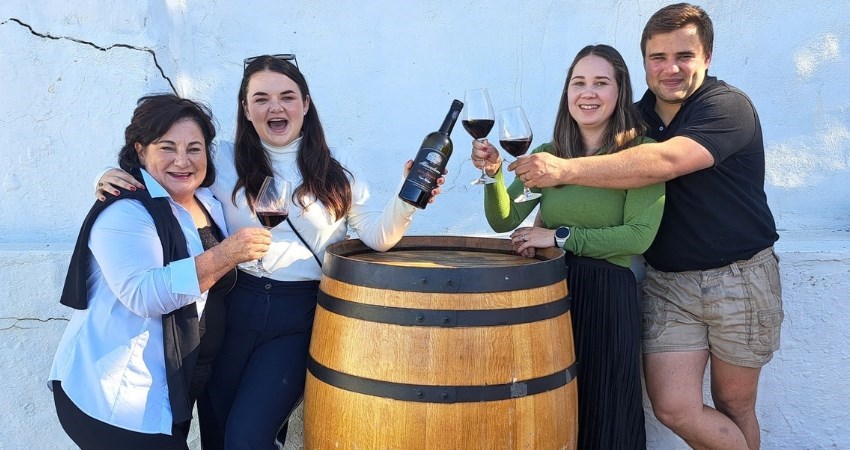
If the focus at tastings in 2025 was on new world vessels like globes and eggs, a landmark tasting at Allesverloren Wine Estate (1704) in the Swartland emphasised the virtues of traditional winemaking in open-top fermentation kuipe (concrete tanks) on the Malan’s sixth-generation farm. The passing of the baton from the late Danie Malan to children Fanie and Danielle marks a new chapter in the story of one of the Cape’s oldest heritage farms.
A tasting of the new releases under the elegant new white Swartland label showcased the signature white Chenin Blanc 2024, Shiraz, Cabernet Sauvignon and the signature dryland Tinta Barocca (made from forty hectares, one-third of production on the farm). Over a magical tasting on the stoep over a gourmet braai on the landmark farm in Riebeeck Kasteel, the family spoke about how the farm which pioneered Portuguese varieties in the early 1900s has evolved from heavily-oaked to fruit-driven wine style. There is a big export demand for the wines today in Germany, Holland and Scandinavia.
Watch out for The Arsonist, a new red blend coming out in late 2025 which tells the origin of the farm with the delightful name Allesverloren, All is Lost. Try saying that in Swedish.
Let the fruit speak
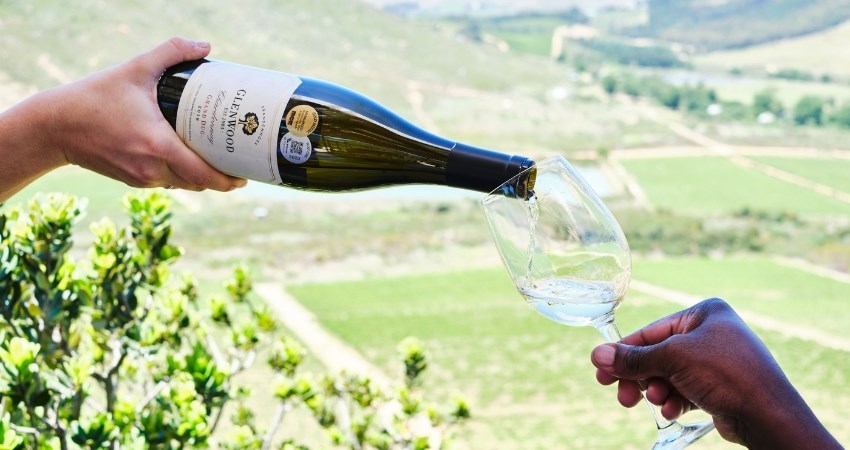
Sharing in the celebrations of the twenty-fifth vintage of GlenWood Vineyards, a family-owned wine farm set on the outskirts of the Franschhoek Wine Valley was yet another highlight of 2025. Since acquiring GlenWood back in 1984, owner Alistair Wood and his team have grown a reputation as a specialist producer of Chardonnay and Shiraz. A wonderful tasting of GlenWood Vigneron's Selection and Grand Duc Chardonnay and Shiraz from 2011 to 2023 demonstrated the evolution of a house-style and consumer preferences from the old-school full-oaked, new-barrel to an elegant, more subtle style.
“We envisaged Franschhoek as Chardonnay country in the early 1990s. Chardonnay is a very forgiving grape. The original recipe for making Chardonnay was simple – twelve months in new oak. The new mantra is more fruit, less oak, less ripe, more austere,” says DP Burger who has got to know every inch of these virgin soils over three decades. “I believe in natural winemaking, in letting the fruit speak.” The long table on the lawns laid with platters of fabulous sushi from their restaurant was a memorable occasion.
The age of amphora
Amphorae have come of age in the Cape in 2025. I recall my first tastings of amphora wine a decade ago at Avondale where pioneer Jonathan Grieve led a tasting of signature Chenin Blanc made in amphora. He makes Avondale’s iconic organic Anima Chenin Blanc and flagship Cyclus white blend using a component of whole-bunch grapes fermented in amphora and Georgian qvevri – and a limited Mourvedre made in amphora.
The Amphora Symposium, a conference on amphora in the winelands in October 2025, was convened by the Wine Machinery Group, which imports the Manetti amphora from Italy. Winemakers turned out to hear amphora specialist Pedro Ribeiro of winery Herdade do Rocim in Portugal. Key speaker Alastair Rimmer, former winemaker at Kleine Zalze (which now has 24 amphora) and De Morgenzon, has worked with amphora for over a decade. He praised the energy, freshness, intensity and vibrancy of amphora wines – the wow factor.
“Don’t underestimate the value of using these vessels as tools to turn up the volume and energy of commercial releases,” Alastair says. “They also make a great blending component. Even a small percentage can turn up the volume significantly.”
An A-Z of amphora
At Haute Cabrière in Franschhoek, I’ve enjoyed tasting the two flagship wines in the new Haute Collection – the Amphora Chardonnay and the Amphora Semillon, made by cellar master Takuan von Arnim from some of the valley’s oldest white vines. His mantra is texture, balance and minimal intervention in the cellar.
He says, “The amphorae used is handmade in Italy and unlike oak, they do not impart any flavour of their own during the fermentation and aging process. This allows for a pure expression of the natural flavours of the fruit and the micro-climates within the chosen vineyard blocks within the wines.” He emphasises the unique qualities of aging premium wines in traditional clay amphorae.
The amphora section of my wine cellar is growing day by day. During 2025, I’ve also come across the new Hannuwa Amphora Collection by Darling Cellars, wines that tell a story of clay and soil – Old Vine Chenin Blanc 2023 and Sauvignon Blanc 2024. The key words are freshness, purity, precision, texture and mineral – the art of amphora.
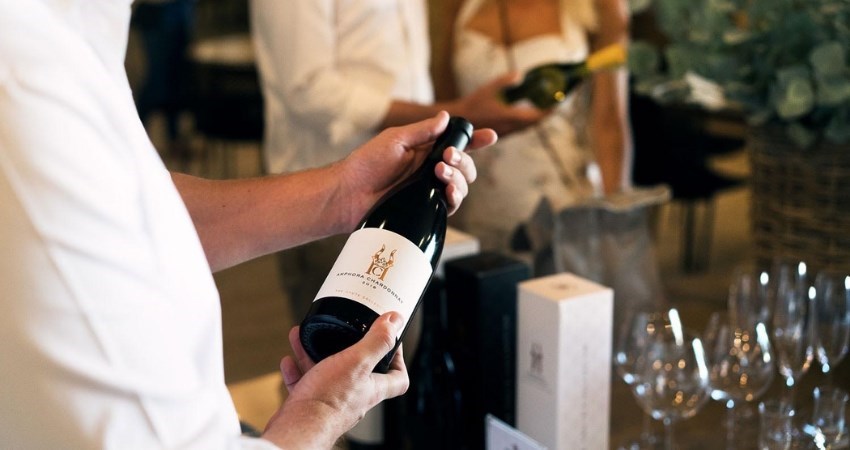
There are many other new releases I’ve yet to try – winemaker Hannes Nel’s new Kleipot (Chardonnay, Roussanne and Petit Syrah) range for Lourensford; Asara Amphora Chenin Blanc; Allee Bleue Amphora Sauvignon Blanc; Wildeberg Semillon; Jason’s Hill Beatrix Chenin; Stellenzicht Acheulean Chardonnay; and Sadie Family Wines Palladius white blend. There’s always next year to try these. Watch out for an amphora awards show, association or tastings soon. It’s already in the cellar, on the label, and out there.