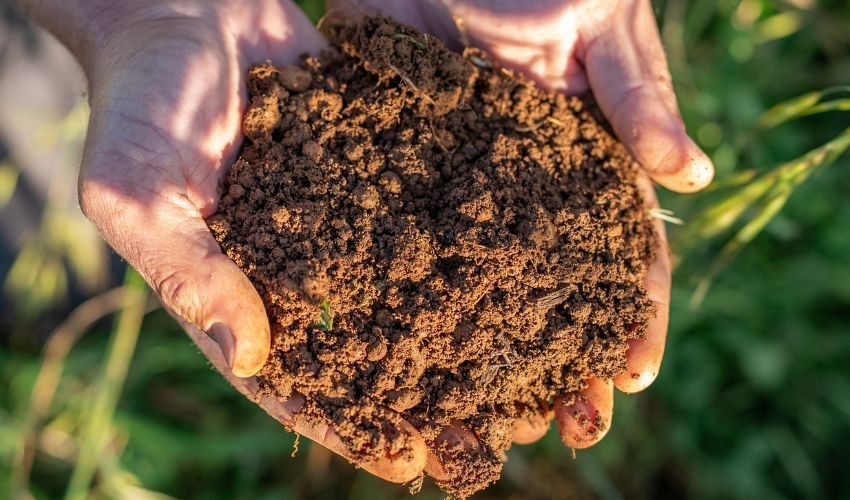
At Hartenberg Estate, the health of our soils shapes our vineyards, our wines, and the long-term wellbeing of the land we farm.
Across the world, soils have been weakened by decades of mechanical disturbance and chemical intensity. Repeated ploughing breaks down structure. Agrochemicals wash into waterways. Fossil-fuel dependency increases emissions and disrupts ecosystems. With every season, the demands on farmers grow, while the foundation they rely on becomes more fragile.
Hartenberg’s response begins where all true change starts, underfoot.
Living soil, living systems
Healthy soil is not inert. It holds moisture during heat, resists erosion in storms, encourages deep root networks, and supports the insects, microbes and fungi that keep nutrient cycles working. When soil is degraded, water runs off, nutrients leach, roots meet hard, compacted layers, and the entire system becomes more vulnerable to both drought and extreme weather.
“For us, regeneration is something we can measure in the soil, see in the vineyard and taste in the wine,” says Tanya Browne (née Mackenzie). “When we look after the soil, the soil looks after the vines, the wine, and ultimately, us.”
As seasons shift, the value of soil health becomes even clearer. Summers are warmer. Rainfall patterns are increasingly inconsistent. Under these conditions, soil health becomes the vineyard’s strongest line of defence. It moderates stress. It stabilises growth. It keeps vines balanced rather than forcing them into cycles of excess and scarcity.
This is why our farming centres on regeneration.
What regeneration means at Hartenberg
Regeneration is not a single technique. It is a shift in thinking away from extraction, towards renewal. On our estate, that change appears in many different ways.
Cover crops and mulches protect the soil surface. We keep disturbance to a minimum to preserve the intricate food networks that develop below ground. Our cover-crop mixes include legumes, cereals and deep-rooted species that together improve structure, return nutrients, and create habitat for beneficial insects.
Livestock play a vital role. Rotational grazing by cattle and sheep helps break the soil cap, stimulates natural cover crop regrowth, and brings back a level of biodiversity that machinery cannot replicate. Their manure returns organic material directly to the vineyard floor.
Biological diversity above the ground supports activity below it. Ladybirds and specialist wasps help control mealybugs. Owl boxes encourage predators. Indian Runner ducks move through the rows in search of snails. With every season, the need for synthetic pesticide inputs declines further.
Compost closes the loop. All garden material, grape harvest debris, and restaurant scraps are processed and returned to the land. Biochar is added to anchor carbon and improve the soil’s ability to hold water.
These choices create a vineyard that functions more naturally. Vines grow steadier, water is held in the profile rather than lost to evaporation, and beneficial species return.
Regeneration extends beyond the vine rows
Our approach to water reflects the same philosophy. Irrigation takes place at night, when evaporation is lowest. All wastewater is cleaned through stone pits and reed beds before being stored in a catchment dam for reuse. This has reduced pressure and ensured the independence of the farm’s water system.
A decade-long wetland restoration has transformed 59 hectares previously dominated by invasive species. Indigenous vegetation has recovered, and with it, a diverse community of birds, amphibians and small predators now thrives. The wetland has become one of the estate’s most resilient ecological assets.
Evidence that regeneration works
Hartenberg’s environmental commitments are supported by continuous monitoring and independent verification.
Biological pest control began in 2007. Cover-crop trials followed in 2010. Livestock were integrated into fallow land from 2017, which later evolved into structured holistic grazing across vineyard blocks.
In 2023, Hartenberg established its Ecological Outcome Verification (EOV) baseline through the global Savory Institute. This scientifically rigorous, independent monitoring tracks key indicators of ecological health including changes in plant species diversity, soil conditions and water infiltration. That same year, we became a WWF Conservation Champion.
2024 marked a major milestone: Hartenberg became the first South African winery to achieve full EOV status. The estate was also recognised as a Conservation Pioneer in the Great Wine Capitals’ Best of Wine Tourism Awards.
This year, our work reached global recognition. Hartenberg joined the Land to Market™ programme, meaning The Eleanor Chardonnay 2023 and Estate Chardonnay 2023 now carry the trusted verification seal for regeneratively managed land. Tim Atkin MW included Hartenberg among the Cape’s First Growths and nominated our viticulturist, Wilhelm Joubert, for Viticulturist of the Year.
Research partnerships strengthen this trajectory. Studies with Stellenbosch University have shown that regeneratively farmed grapes can ripen at lower sugar levels, translating to wines with fresher aromas, cleaner flavours, softer texture, balanced acidity and a slightly lower alcohol content. The ReGenWine project, which runs through 2028, will deepen this understanding by tracking changes in soil carbon, microbial diversity, vine physiology and wine composition.
Alongside these advances, Hartenberg continues to uphold WIETA ethical trade commitments and IPW sustainable production standards.
How wine drinkers can support healthier soil systems
Consumers influence farming landscapes every time they choose a bottle. Wines from regenerative vineyards help drive demand for practices that reduce erosion, support biodiversity, store carbon, and minimise reliance on harmful synthetic chemicals. Look for wines sourced from vineyards that maintain permanent ground cover, integrate animals thoughtfully, avoid routine deep tillage, and undergo independent verification.
Choosing regeneratively grown wines is a tangible way to support healthier land - not only at Hartenberg but across the South African wine industry.
A future built from the ground up
World Soil Day reminds us that lasting change begins with the ecosystems we often take for granted. For Hartenberg, healthy soil is not a slogan. It is the foundation for the estate’s environmental commitments, its scientific partnerships, and the quality of every wine we produce.
The soil beneath our vines has become more resilient, more diverse and more capable of sustaining life than it was a decade ago. The work continues.
To learn more about our regenerative practices, visit our website or contact Andrea at wine@hartenbergestate.com.
At Hartenberg Estate, the secret is in our soil - and the proof is in your glass.