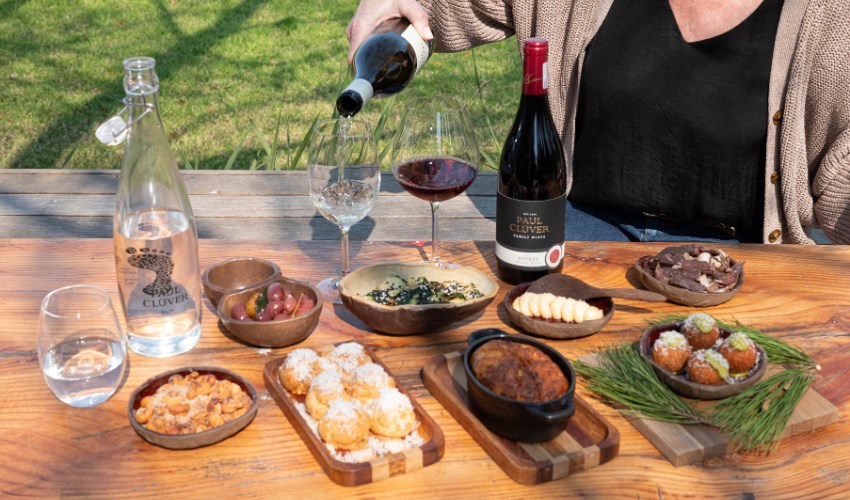
Wine has always been more than liquid in a glass. It carries memory, culture, and identity – yet, too often, wineries reduce their story to medals and tasting notes. In a global market more crowded than ever, South Africa’s opportunity lies not only in making excellent wine (which it already does), but in crafting narratives that connect.
What the experts are saying
As wine marketing strategist Mark Barden recently observed, the challenge is no longer production. “The industry’s challenge isn’t about making better wine – it’s about creating better connections.” His work with “challenger brands” shows that relevance today is earned through values, voice, and vision – not just variety.
Jancis Robinson MW, one of the most respected voices in wine, has long argued that education must go beyond acidity and tannin. In her writing, she consistently reminds us that wine is about context, history, and the people behind the vineyard. Her approach makes a compelling case: storytelling is not fluff, it’s an essential layer of meaning.
Similarly, Jeannie Cho Lee MW, who has studied wine markets across Asia, emphasises the role of culture. In Mastering Wine for the Asian Palate, she points out that consumers interpret taste through memory, language, and heritage. This matters for South Africa: our wines are not just judged against global standards, they must resonate with diverse, multicultural audiences.
Barbara Fitzgerald, a specialist in direct-to-consumer (DTC) branding, highlights another point: trust. “People don’t buy wine. They buy people.” Consumers respond to authenticity – to knowing who the winemaker is, what motivates them, how their land shapes their craft. Brands that skip this layer miss the chance to form lasting loyalty.
And as Heather Daenitz, host of the Wine Marketing Podcast, puts it: “Wine is 50% juice, 50% storytelling.” That balance is what South Africa needs to master.
Closer to home, leading voices echo the same concerns. Mike Ratcliffe has been frank about the gap between aspiration and execution: “Champagne marketing is truly world-class – luxury positioning. Still wine marketing barely exists.” His point is clear: excellence in the cellar is wasted if not matched by excellence in positioning.
Michael Fridjhon, one of South Africa’s most knowledgeable and respected wine commentators, has warned that without a clear vision of what makes a winery unique, brands risk blending into sameness. As he puts it, without a defined unique selling proposition, “you have nothing unique to sell.”
Lessons from business
Branding, as management texts from In Search of Excellence remind us, is not veneer. It is the decision-making framework of an organisation. When a winery neglects to define what it stands for, confusion follows – internally among employees and externally with consumers.
The most successful brands, whether Hermès and Louis Vuitton in luxury or Perrier-Jouët in Champagne, align product, message, and culture.
Founded in 1811, Perrier-Jouët chose Chardonnay as its signature grape, defining a floral, elegant style that became inseparable from its identity. The house has continuously reinforced this positioning through art, design, and storytelling – from its iconic Art Nouveau anemone motif to modern collaborations like the Metamorphosis project, which reimagined the Champagne ritual as a cultural experience.
The lesson is clear: technical excellence alone does not build enduring value. Coherence between product, philosophy, and story does. Wine should be no different.
Beyond jargon: Wine as culture
South Africa already has shining examples. Cavalli Estate blends architecture, art, and sustainability into one coherent experience.
La Motte now leans deeply into art, craft and place: their museum is hosting Threads of Synergy, a tapestry exhibition weaving the work of South African artists into the estate’s identity. Their Ateljee has become a creative hub – hosting sip and paint sessions, textured installations and artist workshops. The recent reimagining of the property also introduced L’Ami Family Brasserie and a redesigned farm shop curated with The Apiary Studio to celebrate South African design and craftsmanship.
Iona’s One Man Band red blend, meanwhile, was inspired by a sculpture by Bruce Arnott, who was Rozie Gunn’s teacher at Michaelis School of Fine Art.
These initiatives work because they place wine within culture. They offer consumers not only something to drink, but something to belong to.
Research shows that too much of the industry has relied on technical tasting as a gatekeeping device. While sommeliers and critics may dissect a wine’s structure, many consumers simply want a story they can connect with – a narrative that makes the wine memorable and relevant.
As neuroscience reminds us, smell and memory are deeply intertwined. When we frame wine through metaphor, history, or creative inspiration, we activate something far deeper than the palate.
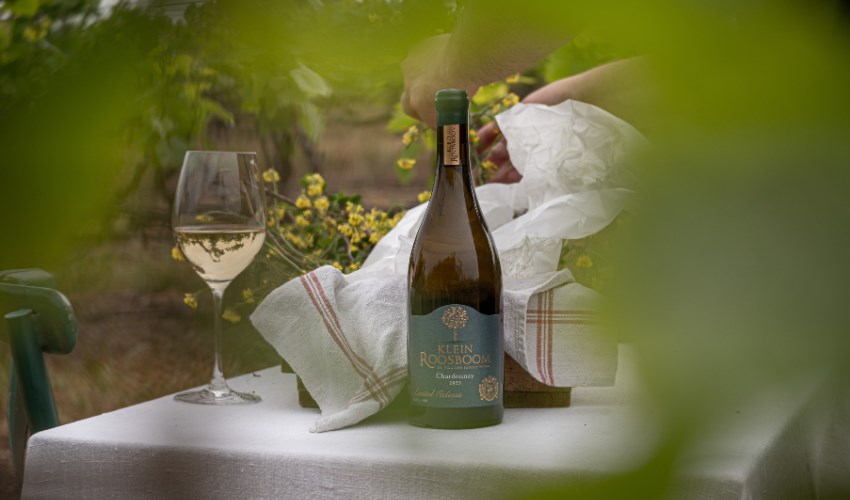
Rock of Eye: Thinking outside the box
Consider Rock of Eye Wines in Stellenbosch. The name is drawn from tailoring: cutting cloth freehand, guided by instinct rather than pattern. Winemaker Coenie Snyman’s surname – meaning “cutter” – makes the metaphor literal. His wines are crafted with the precision of a tailor working by hand.
But the brilliance of the brand is not only in the wine. The concept was conceived by designer Rohan Etsebeth of Archival, who thought beyond the conventional label and captured a philosophy of craftsmanship and intuition. It is an identity rooted in heritage yet daringly modern – a case study in thinking outside the box.
This is what branding should be: marrow, not make-up.
A call to rethink
The future of South African wine will not be won on points alone. It will be won through clarity, culture, and connection. Global players from Hermès to Perrier-Jouët have shown that purpose, collaboration, and immersive experiences can transform brands into cultural forces.
Wine is perfectly positioned to do the same. It carries heritage, artistry, and place in every bottle. What it needs is translation: strategies that help wineries articulate their essence and share it in a way that is memorable, human, and trustworthy.
The task is not simply to market better. It is to ask harder questions:
- What do we stand for, beyond variety and vintage?
- How does our story connect across cultures and generations?
- How do we invite not only connoisseurs, but the curious?
Wine at its marrow is memory, craft, and connection. If we can tell those stories with honesty and imagination, South Africa will not just compete. It will lead.
Photos: All photos were taken by Christine Lundy.