From responsible water usage and recycling to minimalist, biodegradable packaging, everything possible has been done to reduce human and mechanical impact on the farm. In fact, the estate is now properly understood to be part of an one-of-a-kind, naturally-landscaped ecosystem.
Vergenoegd Löw’s holistic approach is farming sustainably and practicing regenerative agriculture. It started with a detailed analysis of the soil to determine exactly which grape variety would grow best on which part of the farm. Then only the healthiest young vines were planted, along with cover crops between the rows to boost biodiversity and attract microorganisms. The microorganisms, in turn, enrich and aerate the soil.
The Runner ducks – which Corius Visser, managing director of Vergenoegd Löw, describes as the farm’s “soldiers” – are an important element of the sustainable farming drive on the estate. “The ducks are preoccupied foraging the vineyards,” he says. “Their long necks enable them to reach quite high for worms, snails and insects, so there is no need to spray the vines with harmful chemicals. Their droppings also nourish the soil and feed the vines.”
The ducks were originally bred in the East to keep the rice fields pest free. They don't fly and only rarely form nests and incubate their own eggs, often dropping their eggs wherever they happen to be. The ducks stand erect like penguins and, rather than waddling, they run. The females usually lay more than 300 eggs a year, which, during the six-month egg-laying season, can be ordered for breakfast in the estate’s Geuwels Restaurant.
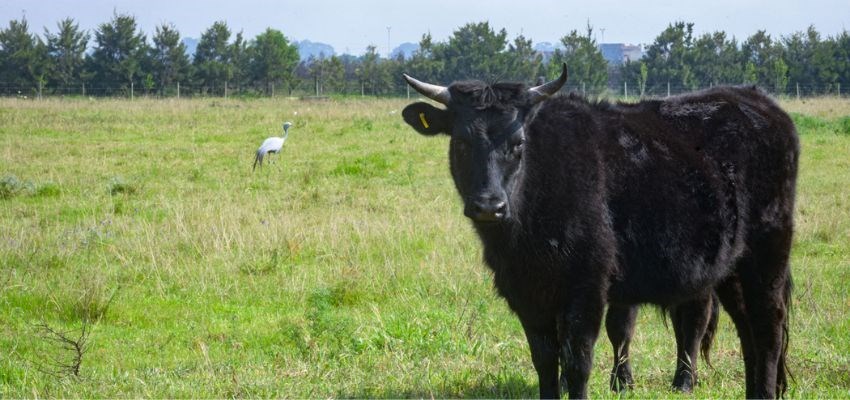
But there’s also a new “kid” on the block. Dexter cattle have recently been introduced to the farm, their main task being to get rid of unwanted weeds...
Click HERE to read the full article.